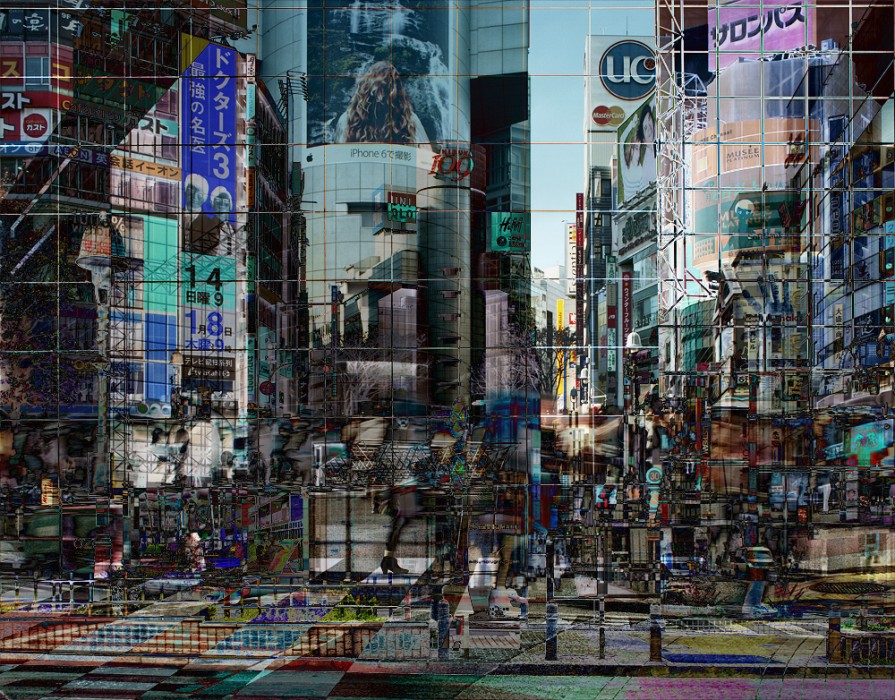
Invisible City
-
PhotographerKazuya Urakawa, Japan
-
StudioCitta Materia
-
Socials
-
Website
It [the street] cannot exist in a vacuum; it is inseparable from its
environment.... Its viability depends as much on the right kind of
architecture as on the right kind of humanity.
(Bernard Rudofsky, Street for People: A Primer for Americans, Anchor
Press/ Doubleday, 1969, P20)
They [locus, meaning 'place' in Latin] trace the relation of architecture
to its location -the place of art- and thereby its connections to, and the
precise articulation of, the locus itself as a singular artifact determined
by its space and time, by its topographical dimensions and its form, by
its being the seat of succession of ancient and recent events, by its
memory.
(Aldo Rossi, Architecture of the City, The MIT Press, 1984, P107)
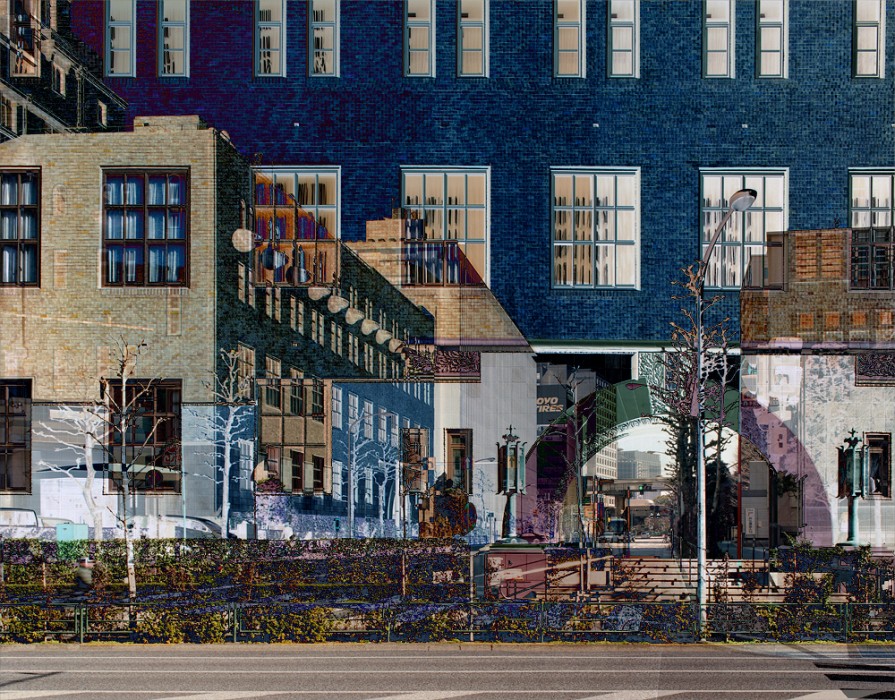
If the theories by Rudofsky and Rossi are true, where is the singularity
of city in Tokyo which is suddenly updated as if it breaks off historic
context? Even though I faced the situation that many buildings which
defined memory of place were dismantled in sequence, I could only
continue archiving Tokyo without being able to answer that question.
I have come to think that the viewpoints seeing the city can be
represented by two types of them while I have continued archiving
Tokyo. One is the viewpoints of general people enjoying the city, the
other is those of architects and city planners creating the city. While I
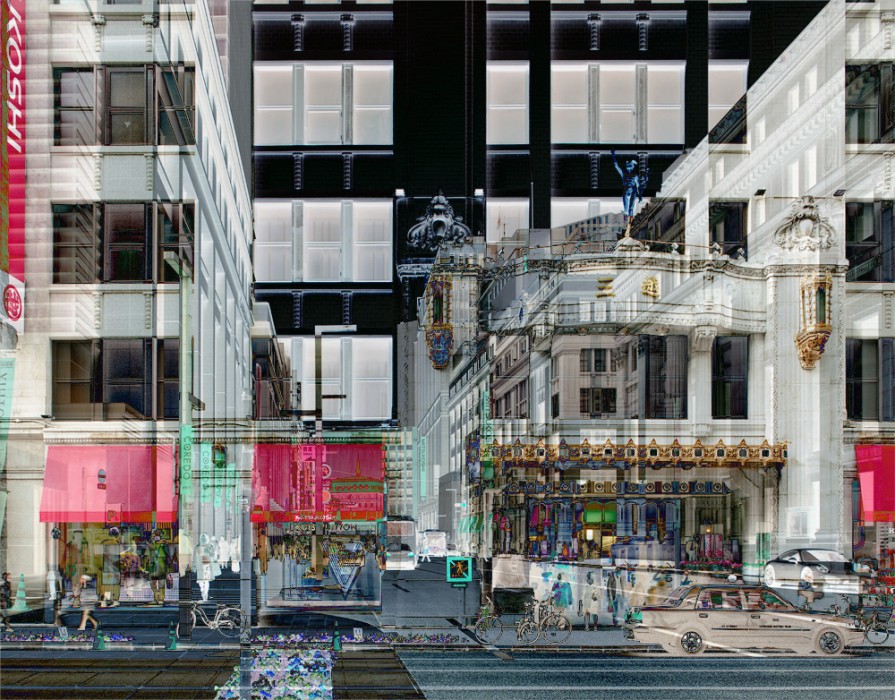
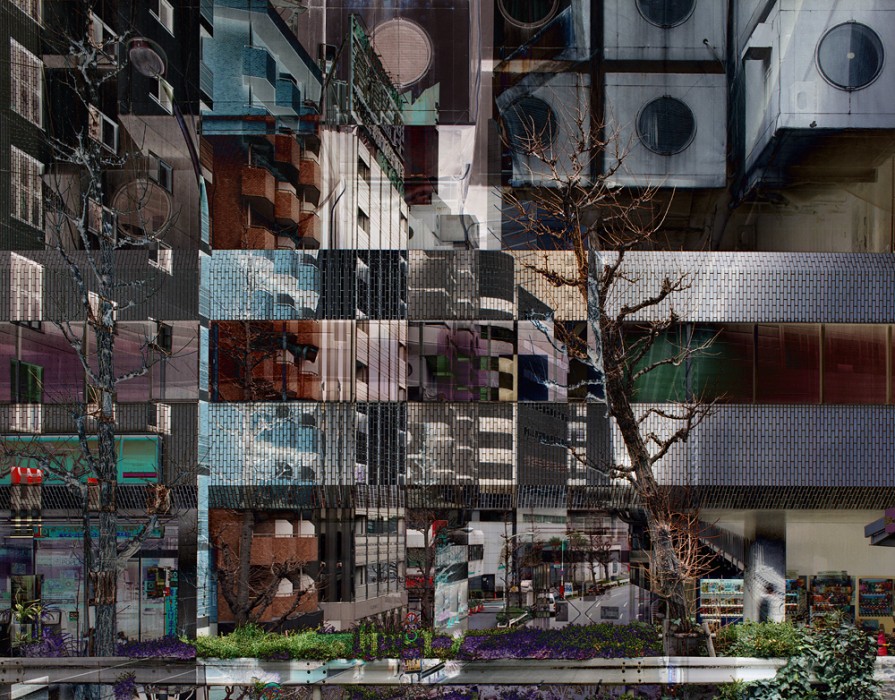
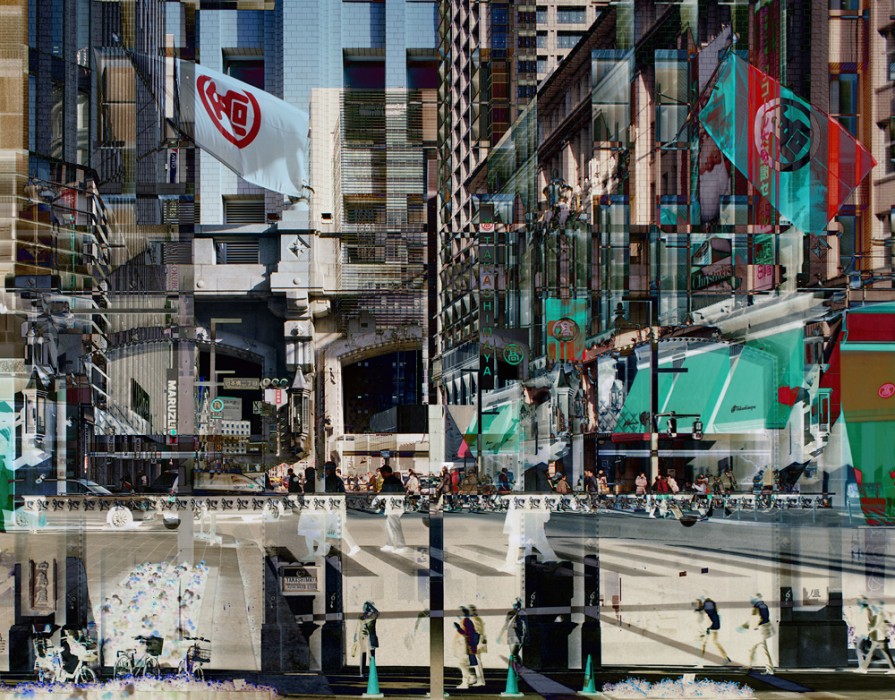
watched my works of cityscape once, I noticed that invisible cities
appeared as a result of interpenetration of those viewpoints that never
overlapped each other.
Invisible cities inflate the singularity of themselves by bringing about
distortions in space, time and architecture while they dismantle
physical forms and refuse the search of the place by the
viewer. I will continue looking for the alternative singularity of the city
in invisible cities and archiving memory of place which may be lost.
-
BiographyI am a photographer and a registered architect in Japan. I was born in 1972 in Sapporo and resides in Tokyo. Concerned by the rapid change in Japanese cities, particularly in Tokyo, I began to photograph Japanese modern architecture and cityscape in 2005. My theme of creation is what documents and visualizes the irreproducibility of the city which is caused by conflict between the continuously changing cityscape and the memory of place being accumulated in the city.
-
Awards[AWARD] 2019 Moscow International Foto Award 2019, Places of Amnesia, Gold (Science/Environment) 2017 LA FABRICA PHOTO LONDON BOOK DUMMY AWARD, Nominated for one of the 20 shortlisted works 2017 International Photography Awards 2017 Competition, Honorable Mention (Architecture:Cityscapes, Fine Art:Collage, Book(Self-published):Fine Art, Book(Self-published):Other) 2017 ISTANBUL PHOTOBOOK FESTIVAL FUAM DUMMY BOOK AWARD, Nominated for one of the 34 shortlisted works 2016 Steidl Book Award Japan, Nominated for one of the 44 longlisted works 2015 International Photography Awards 2015 Competition, Honorable Mention(Fine Art:Collage) 2015 The PX3 2015 PHOTO COMPETITION, Honorable Mention(Fine Art:Abstract) 2014 ONWARD Compe '14, Finalist 2012 PENTAX RICOH Photo Contest, winning a prize [Solo Exhibitions] 2020 Reconstructed : Gallery Tosei, Tokyo, Japan 2016 invisible cities : Pinco Palino Tokyo. Tokyo, Japan [Selected Group Exhibition] 2018 The Book Dummy Award 2017, Photo London, London, UK 2018 PHOTOBOOK AS OBJECT PHOTOBOOK WHO CARES in Photobook / NZ, The Engine Room, Whiti o Rehua School of Art, Massey University, Wellington, New Zealand 2017 The Photobook Show of the Athens Photo Festival 2017, One of 350 Selected Photobooks, Benaki Museum, Athens, Greek 2017 NEW WAVE Handmade photobooks from Tokyo, Hardwick Gallery, University of Gloucestershire, Cheltenham, Gloucestershire, UK 2016 Special Exhibition: Steidl Book Award Japan, The Tokyo Art Book Fair 2016, Tokyo, Japan 2016 Photobook As Object Exhibition by workshjop participants, Remminders Photography Stronghold, Tokyo, Japan 2014 ONWARD Compe '14 : Annual International photography competition finalists exhibition, Project Basho, Philadelphia, U.S.A 2012 PENTAX RICOH Photo Contest Exhibition, Pentax forum gallery, Tokyo, Japan [Publishing] 2016 Tokyo Perspective, Self Publishing limited 50 copies 2016 NEW JAPAN PHOTO ISSUE.1 ( EINSTEIN STUDIO ) 2011 7 Factores of cities, Self Publishing limited 50 copies