Enclosed : Living Small
-
Prize
-
PhotographerWon Kim, United States
-
Studiowww.wonkimphotography.com
The Japanese are well-known for making efficient use of small
living areas, a necessity of their high population density. I myself
often find the womb-like qualities of these spaces comforting, not
confining. This feeling is what led me to the subject of these
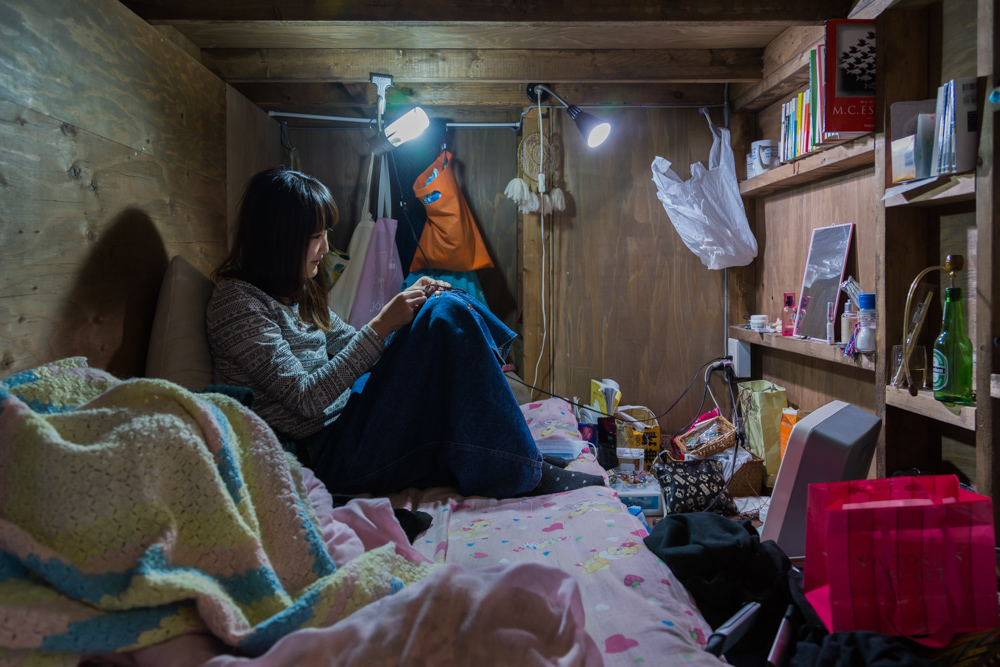
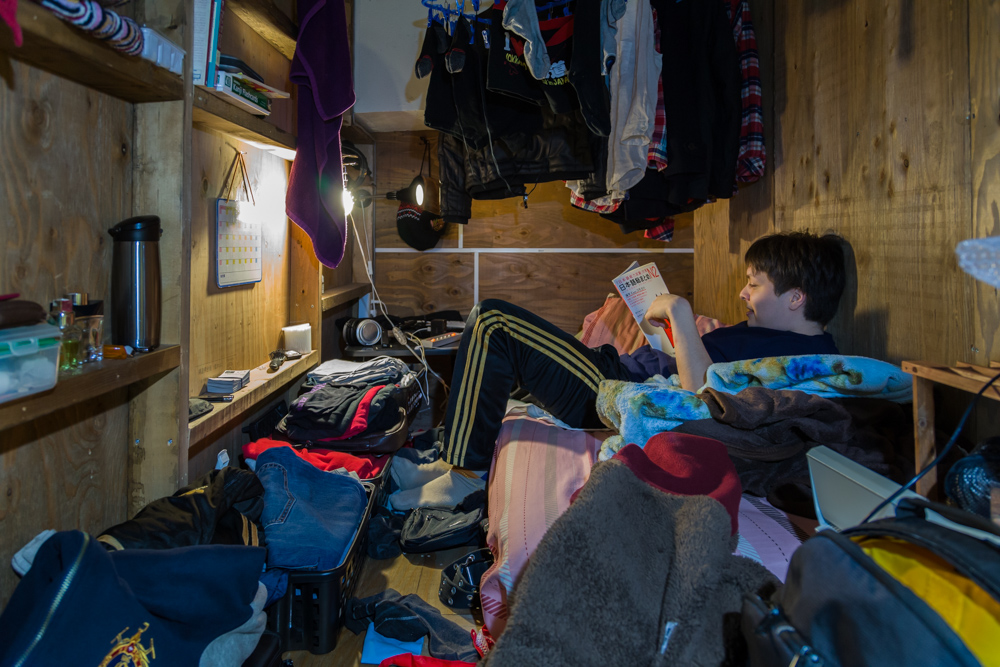
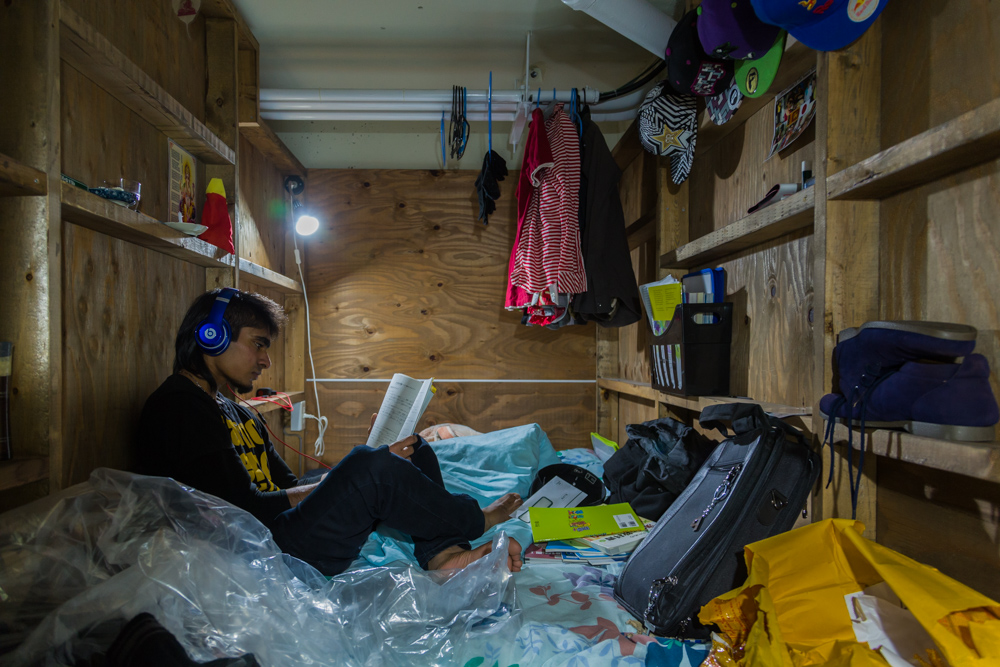
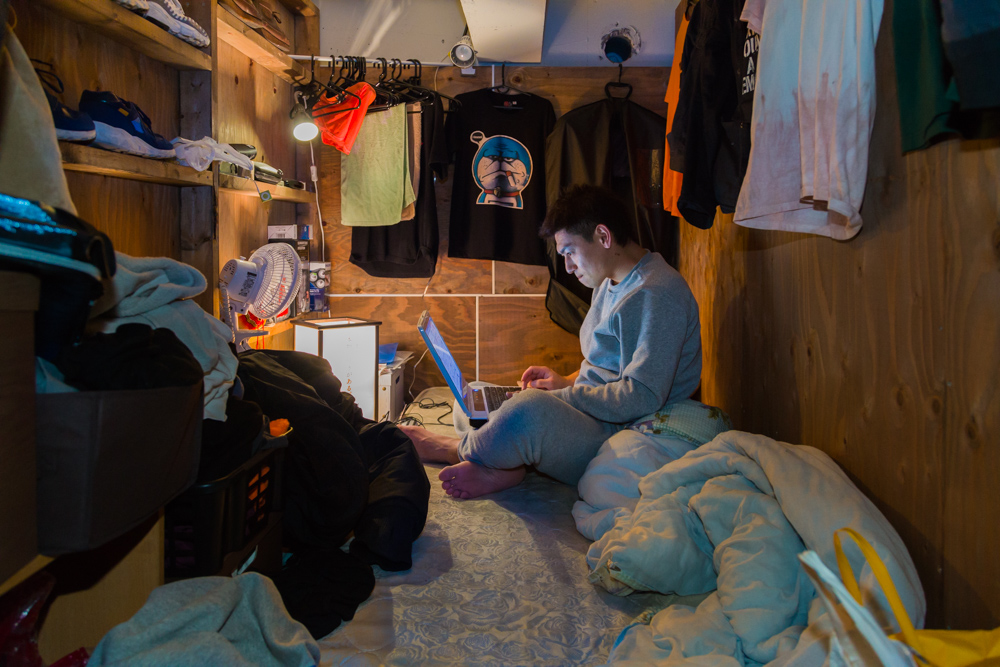
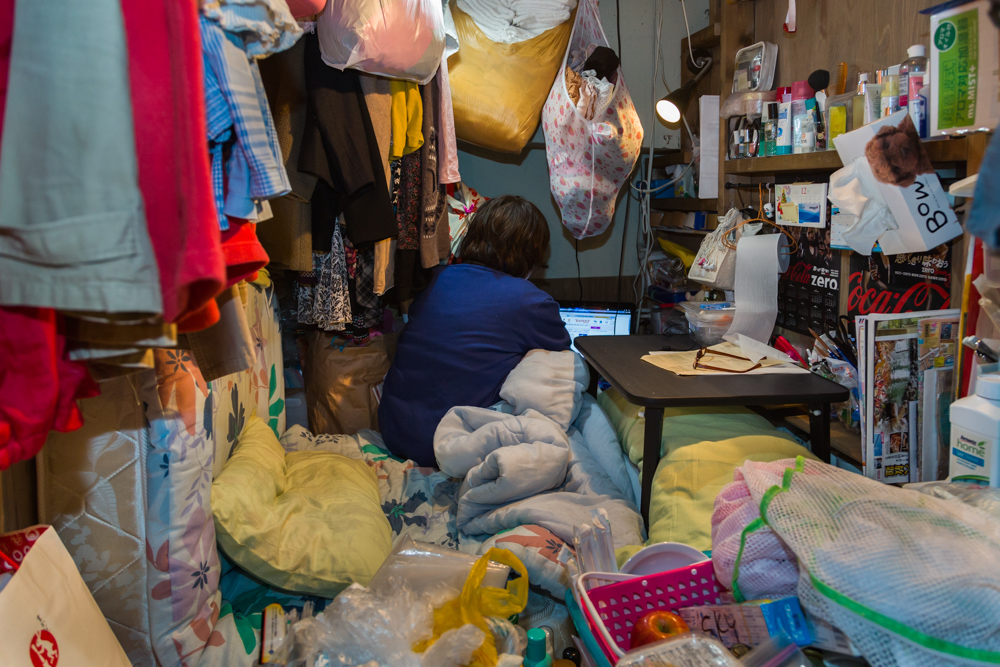
portraits, which show the residents of what is best described as a
guesthouse for backpackers in Tokyo. The facility is a sort of
downscale version of the well-known “capsule hotels” often used
by Japanese businessmen for short-term stays.
One of several such facilities in the city, this diminutive, bare-
bones hotel takes up one floor of an office building. It is
composed of a few hallways, along which the proprietor has built
tiny living compartments, perhaps no larger than XX x XX feet,
none with enough headroom to stand up straight inside. Separated
only by unfinished plywood, the spaces have no windows or door,
only a curtain at the entrance for privacy.
Some of the people in these images, whom I’ve shown surrounded
by their possessions, stay at the facility for a relatively short time.
They may be visiting Tokyo, waiting for a job to come through, or
saving money for a better place to live. For other residents, these
tiny cubicles are essentially permanent homes.
For me, the real interest of the resulting portraits is in how each
resident has made use of a such a small, confining space. Some of
the interiors are spartan, perhaps occupied by people who are
staying only for a short time. Others are full of possessions, often
complete with hanging wardrobes and improvised bookshelves—
even “decorated.” Of these, some are neat and orderly and others
are chaotic, with personal items strewn everywhere. In each case,
the sharply-defined space and its contents tell something about
its occupant’s personality, and his or her ability to function in such
-
Awards[Awards] 2014 Finalist, Photoworld 2014 by New York Photo Festival Invited artist, NEXT | Curated by Elizabeth Avedon, Castell P hotography Invited artist, OPEN | With Juror Shane Lavalette, The Center for Fine Art Photography Honorable mention, People/Lifestyle, International Photography Awards Humanitarian Documentary winner, Pollux Awards (Worldwide Photography Gala) 2013 Selected artist, LensCulture: 21 New & Emerging Photographers Third Prize, Architecture/Interior, International Photography Awards Honorable mention, Deeper Perspective, International Photography Awards Honorable mention, People/Lifestyle, International Photography Awards Honorable mention, Architecture/Other, International Photography Awards Juror Award of Merit, International Fine Art Photography Awards First Prize, Architecture/Cityscape, American Aperture Awards Honorable mention, Street Photography, American Aperture Awards 2012 Honorable mention, One Shot/Spaces, International Photography Awards [Press & Publications] 2014 New York Times T magazine, USA Digital Camera World, UK 2013 LensCulture, France IPA & Lucie Awards Annual, USA Photographer's Forum magazine, USA [Exhibitions] 2014 The Powerhouse Arena at Dumbo Arts Festival | Brooklyn, USA Photoworld 2014 The Center for Fine Art Photography | Colorado, USA OPEN Castell Photography Gallery | North Carolina, USA NEXT : New Photographic Visions SVA Gramercy Gallery | NYC, USA 23/7 St. Remy de Provence | Arles, France Springtime and Rebirth SVA Flatiron Gallery | NYC, USA Nearly Distant Municipal Heritage Museum | Malaga, Spain Third international Biennial of Fine Art and Documentary Photography Calumet Gallery | NYC, USA Natural Selection 2013 School of Visual Arts | NYC, USA Senior Show 2012 School of Visual Arts | NYC, USA The Evolution Unfolding Dek 22 Gallery | Rotterdam, Netherlands Low Budget & High Class WdKA Gallery | Rotterdam, Netherlands & Thanks for all the fish Kareldoormanstraat - Weena | Rotterdam, Netherlands The (In)Visible Harbour 2010 Space Womb Gallery | NYC, USA Up Close