OVERFISHED OCEANS; THE PATH TOWARDS SELF-DESTRUCTION
-
PhotographerJAVIER SANCHEZ-MONGE ESCARDO, Spain
-
StudioAGE FOTOSTOCK INTERNATIONAL/ PERIODISTAS EN ESPANOL
This long-term project analyzes the human being-environmental relationship by exposing
the path that follows the sustainable fishing communities which are capable of making a
sustainable living without causing damages to the environment and the opposing path of
ambition, which leads from sustainable fishing to commercial fishing, in which the main
goal of the primitive fishing communities ,consisting in subsistence and survival, is
traded by the ambitious greed for huge profits leading to commercial fishing.
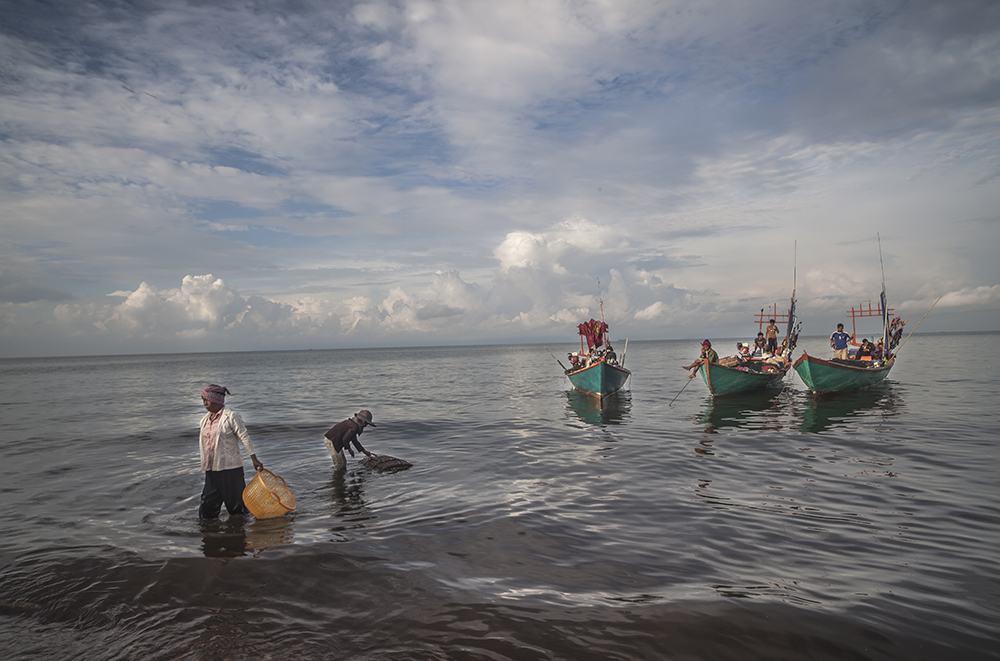
The initial primitive fishing community belongs to Cambodia, representing a sustainable
community which focused themselves on survival or at the very most on the trade of their
surplus fishing products for other goods.
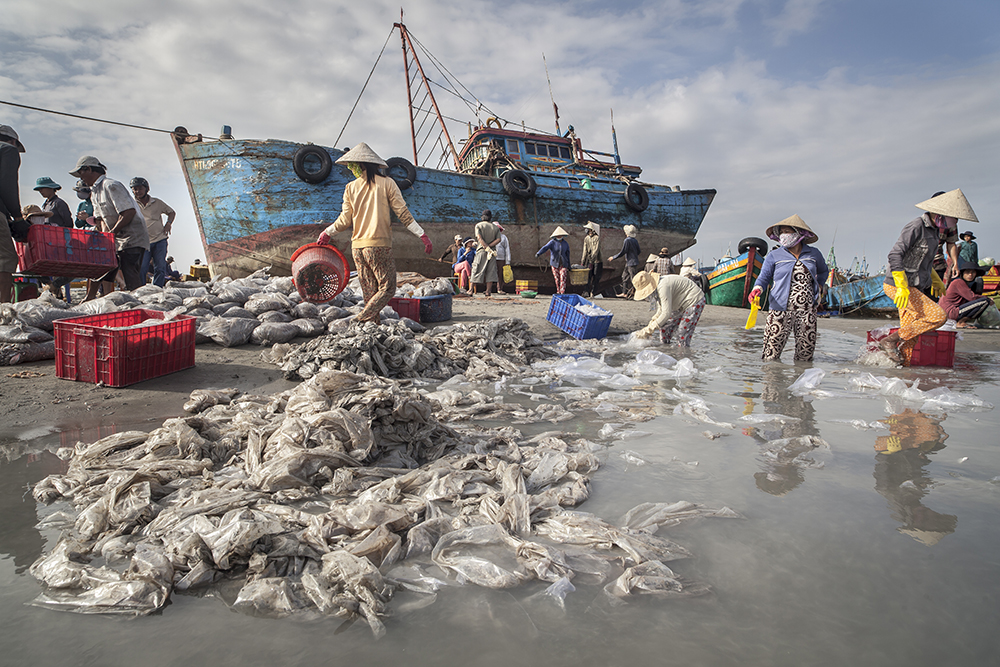
The following fishing community belongs to Vietnam, and although it was some years ago a
traditional one, for the past years the abundance of fishing species rapidly changed it
into a huge fishing location, becoming one of the main suppliers of the Vietnamese fishing
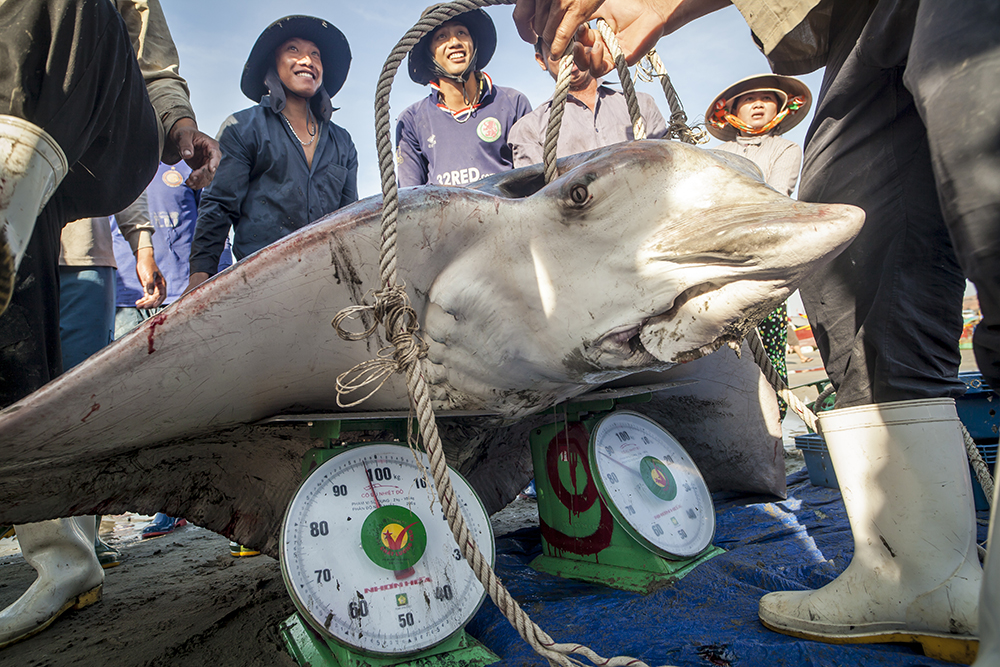
markets. Their fishing is aimed for profits , and the capture of an extremely rare Banded
Eagle Ray is only valued from the perspective of the substantial profits that it will bring.
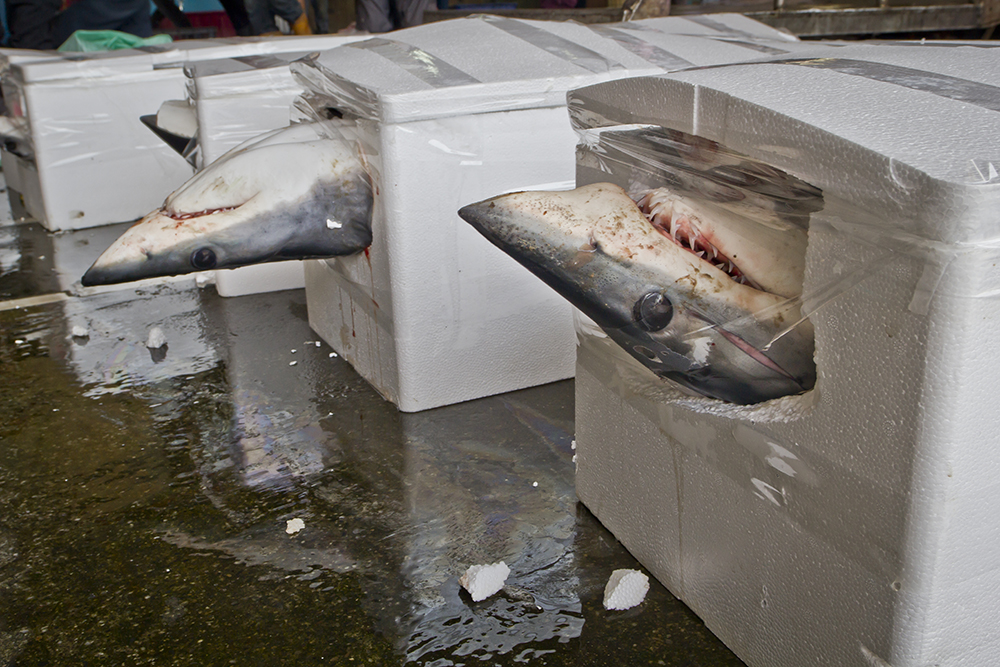
The sharks packed in boxes belong to a heavy industrialized and organized Taiwanese
company, specialized in the fishing of large quantities , regardless of the capture of any
possible endangered species.
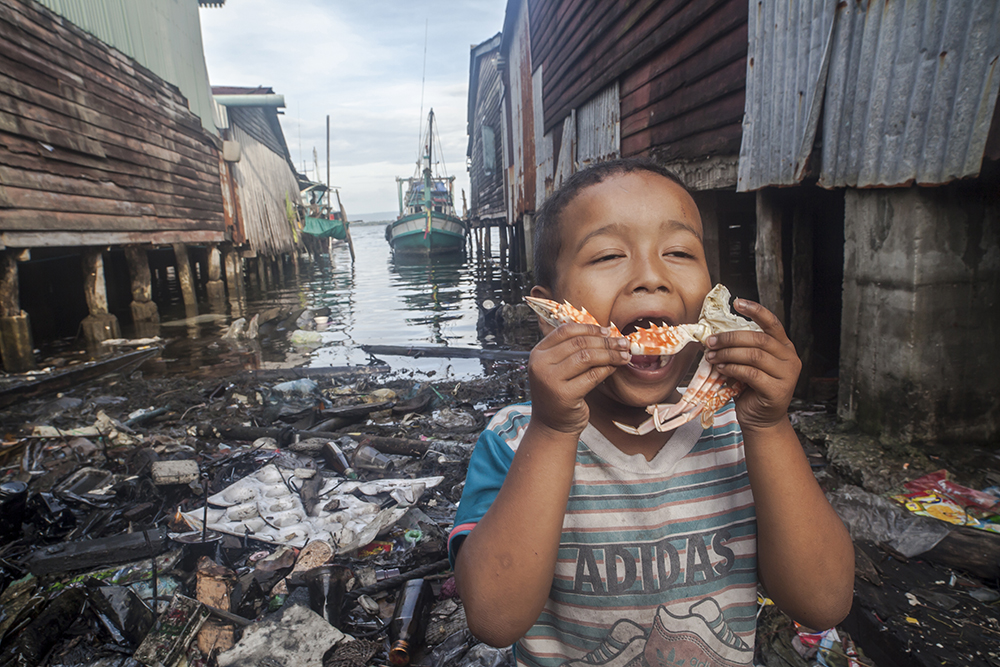
The last example already reveals the broken man-environmental relationship. A child
attempts to eat a piece of crab which his father has captured in far away waters. Although
initially this fishing village in the island of Koh Kong in Cambodia had a perfect
environmental relationship, the whole village became totally careless about their
surroundings. They never provided for any waste management or sewage systems, and they
overfished their waters. Today and due to the climate change, this fishing village is
slowly sinking below the waters .
-
AwardsMy name is Javier Sanchez-Monge Escardo .I was born in Madrid in 1965.Education: Degree in International business management at the Schiller International University Germany (Heidleberg), 3 years of Biology studies at the University of Alcala de Henares and a degree in Philosophy, followed by a PHD still to be finished. Several advanced photography courses, video and editing. Can speak and write in different languages. Constantly I have been travelling around the world, photographing and living in foreign cultures. AWARDS 2014 FIRST PLACE (GOLD) People’s Choice Awards 2014, Press Feature Story at the Prix de Paris Awards (PX3 2014) FIRST PLACE (GOLD)) /General News at the Prix de Paris Awards (PX32014) FIRST PLACE (GOLD) People’s Choice Awards 2014 /Nature Environmental at the THIRD PLACE (BRONZE) Press Feature Story at the Prix de Paris Awards 2014 THREE HONORABLE MENTIONS Prix de Paris Awards (PX3 2014) 4 HONORABLE MENTIONS at the ND Awards (2014).THREE HONORABLE MENTIONS at the International Photography Awards (IPA 2014). 2015 TWO HONORABLE MENTIONS MONOCHROME AWARDS 2014, TWO HONORABLE MENTIONS IPA one shot awards 2015 Works exhibited during the Month of Photography, Los Angeles by the LUCIE FOUNDATION. SEVEN HONORABLE MENTIONS IPA 2015, FOUR HONORABLE MENTIONS Prix de Paris White Awards 2015.SIX HONORABLE MENTIONS Prix de Paris Awards annual competition 2015 TWO HONORABLE MENTIONS ND AWARDS 2015 IPA 2015 SECOND PLACE Award Category Event Culture and traditions. IPA THIRD PLACE AWARD Awards Category Portraiture, Children. PRIX DE PARIS 2015 SILVER MEDAL Environmental Press category. PRIX DE PARIS 2015 BRONZE MEDAL Portraits category. FIRST PLACE ND AWARDS 2015 (GOLDEN STAR AWARD) People. FIRST PLACE ND AWARDS 2015 (GOLDEN STAR AWARD) Editorial, Environmental. FINALIST WITH HONORABLE MENTION at the SIENA INTERNATIONAL PHOTOGRAPHY AWARDS storyboard category, FINALIST NOMINEE at the FINE ART PHOTOGRAPHY AWARDS (FAPA 2015) portraits category, FINALIST NOMINEE at the FINE ART PHOTOGRAPHY AWARDS (FAPA 2015) Photojournalism category. 3HONORABLE MENTIONS MONOCHROME AWARDS 2015