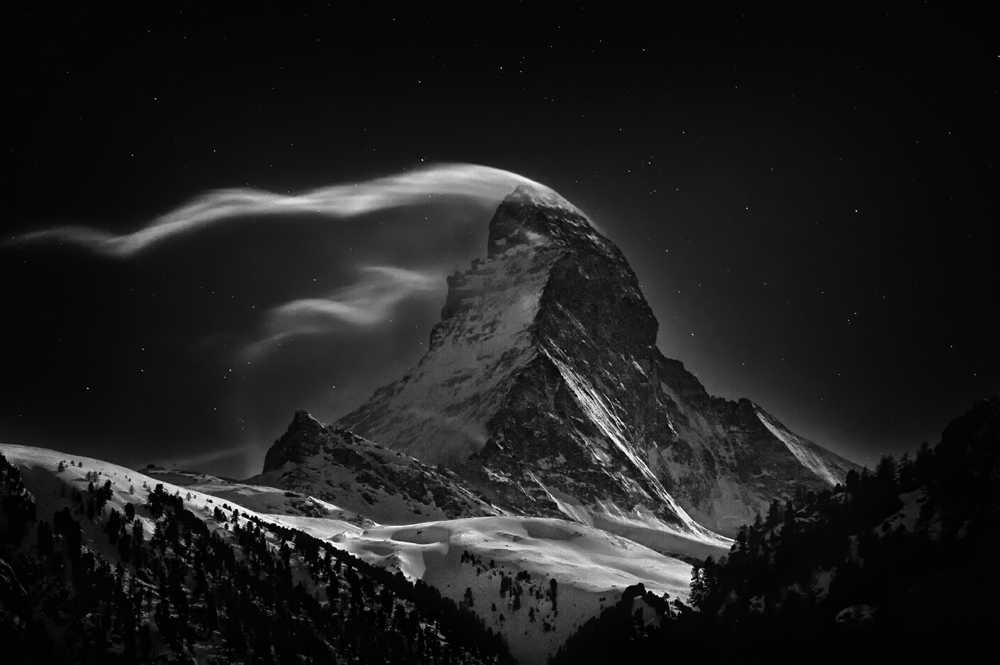
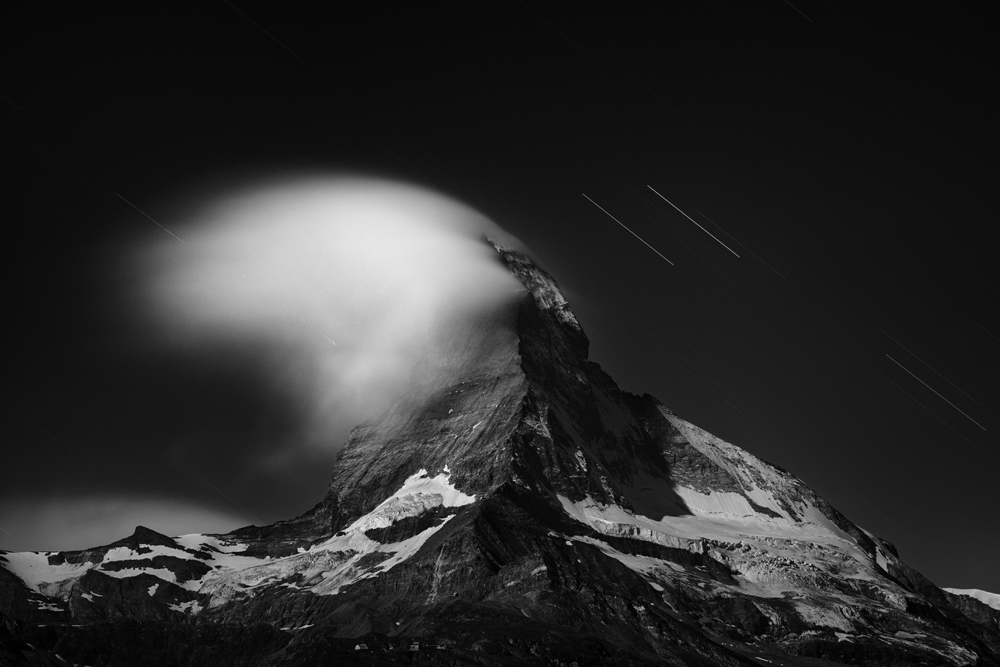
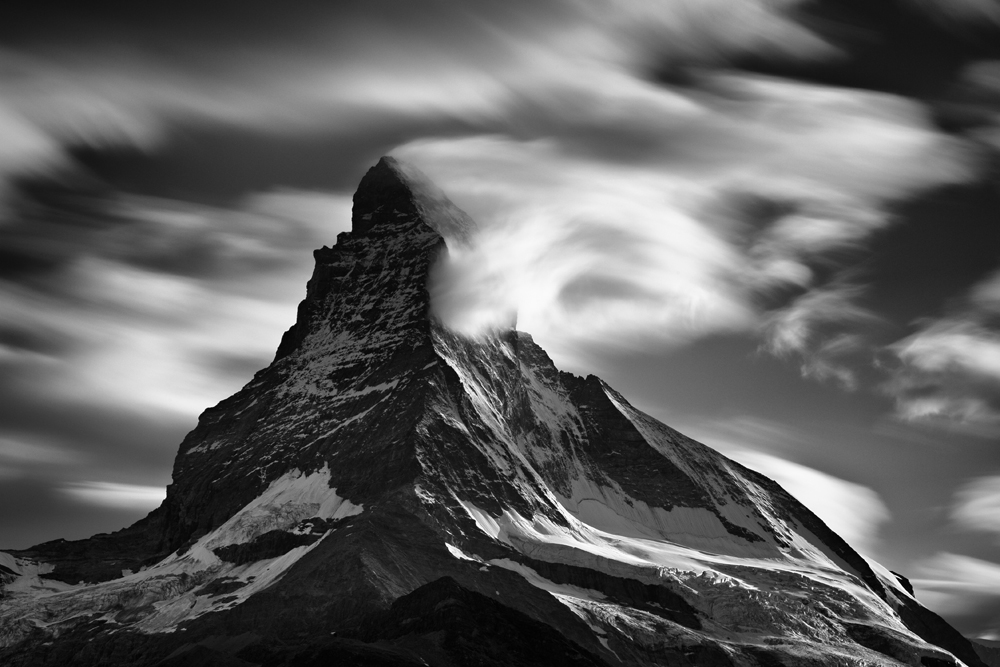
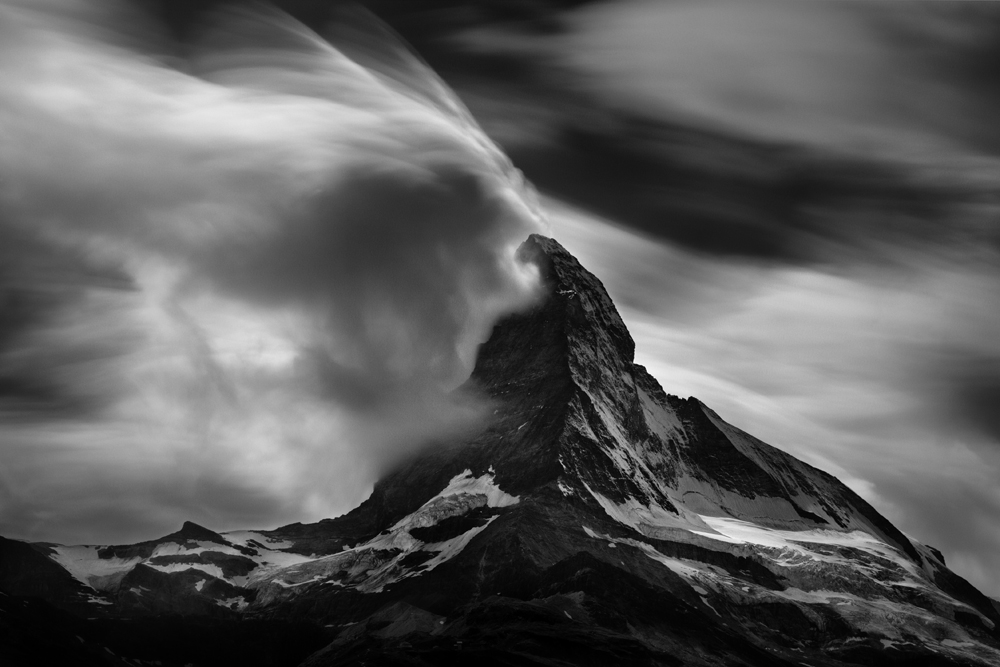
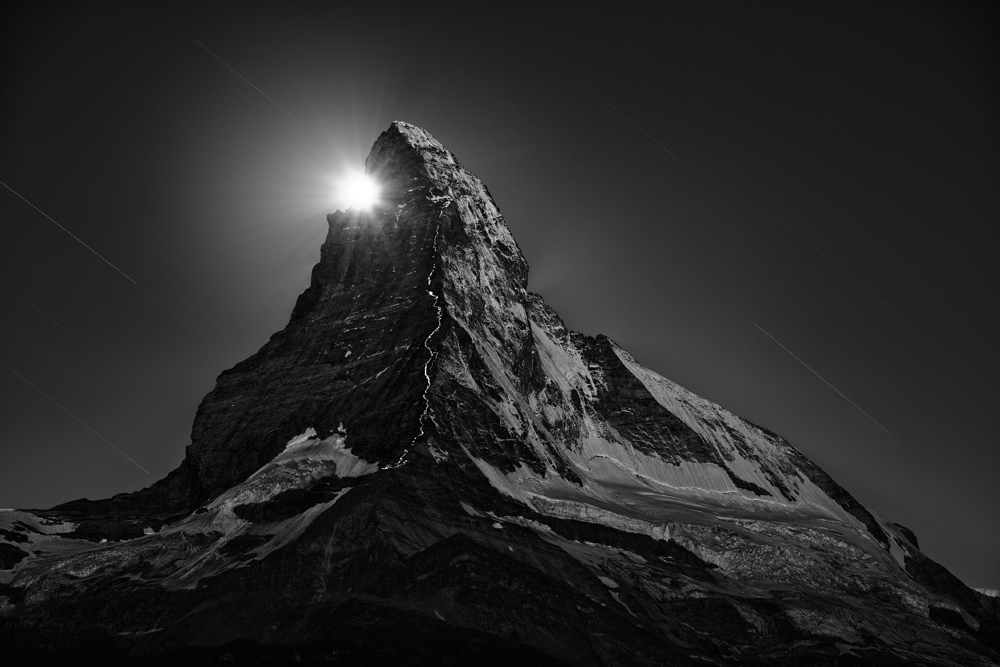
A Portrait of the Matterhorn
-
Prize
-
PhotographerNenad Saljic, Switzerland
-
Website
There are mountains, and there is the Matterhorn.
The Matterhorn was the last great Alpine peak to be climbed
and its first ascent in 1865 marked the end of the golden age of
alpinism. Seven men reached the summit but four died on the
way back. The triumph and tragedy of this feat is the epitome of
man's desire to explore, to go beyond the limit. A reminder of
how great and how small we are at the same time.
The Matterhorn is a product of geological processes that
transcend our concept of time. It was born from the remnants
of an enormous African rock mass which originated more than
250 million years ago. This mass was pushed northwards
colliding with the European continental plate, forcing its way
upwards and resulting in alpine folding 100 million years ago. It
reached its maximum heights 30 million years ago, modeled by
natural erosion from the top to the bottom, and finally acquired
its characteristic pyramidal shape over the last 2.6 million years.
The Matterhorn that is rising to the sky today, although graceful
and uniquely formed, is just a majestic ruin, only a fragment of
an eroded mountain. It is subject to wear caused by erosion and
weathering and it will eventually round off and disappear
forever. In the long term, plate tectonics will finish the job. The
geological clock will reset all over again and a new Matterhorn
will emerge somewhere else in 50-300 million years.
Will humans be around to climb those mountains?
-
BiographyNenad Saljic was born 1961 in Croatia. He is is a Zermatt-Switzerland based photographic artist. Being trained as a mountaineer and a caver, Saljic is inspired by earth’s geological history. His projects include three artist books: Matterhorn: Portrait of a Mountain (a seven-year project concluded in 2015, German-English bilingual), Birth of a Ship (shot between 2007-2009 and completed in 2017) and Void (releasing in 2019). Currently, he’s been working on the project Naked Mountains, which he has started in 2014. Šaljić is represented by Kunsträume|The Heinz Julen Art Gallery Zermatt.
-
Awards2015 PDN Photo Annual, New York: Winner 2014 Prix de la Photographie Paris (Px3): Gold Award 2013 Sony World Photography Awards, London: Professional Landscape Photographer of the Year 2013 IPA/Lucie Awards, Los Angeles, USA: First Prize – Book “Birth of a Ship” 2013 PDN Photo Annual, New York: Winner 2013 Photodays Rovinj, Croatia: First Prize – Photobook “Birth of a Ship” 2012 National Geographic Photo Contest: First Prize 2012 World in Focus, PDN Magazine, New York: Grand Prize Winner