The citizens
-
Prize
-
PhotographerPatrycja Pawęzowska, Poland
-
Website
THE Citizens. The frame and beyond.
Once again the belief is confirmed
that the most important part of the body,
with which we identify ourselves, is the face.
Krzysztof Jurecki
The following sketch is a component of the PhD discourse on aspects of the identity of the
portrayed. The purpose of the implementation of the photographic series called "The
Citizens" is to answer the question as to whether a portrait may be of other than
individual quality and where the intimate character has its limits. Throughout the whole
set the author introduces typical for her work attitude to the relationship between the
portrayed and the environment. Throughout the whole set the author introduces typical for
her work attitude to the relationship between the portrayed and the environment.
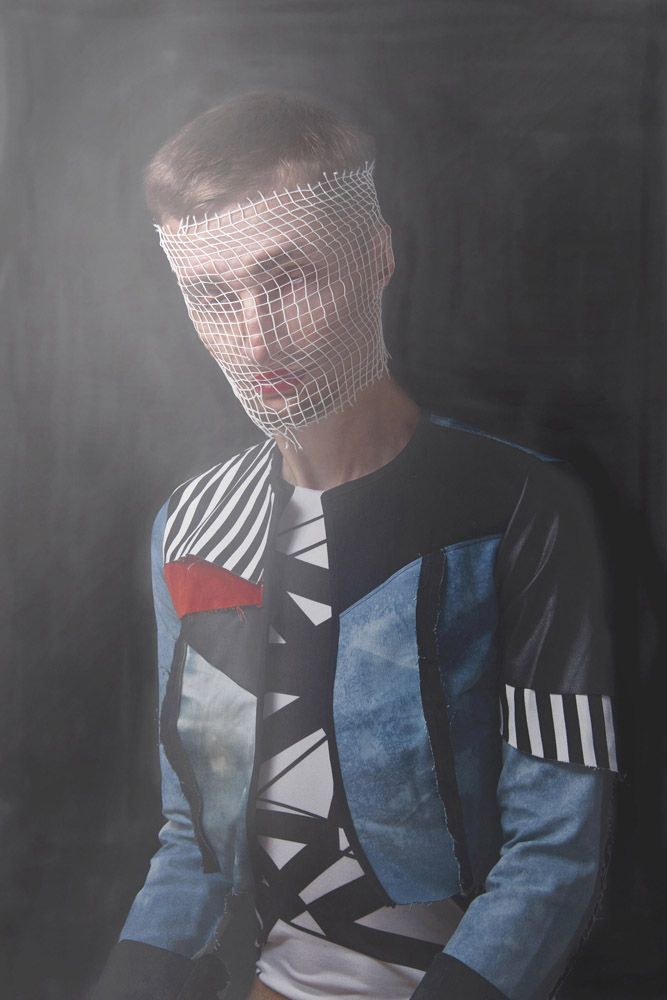
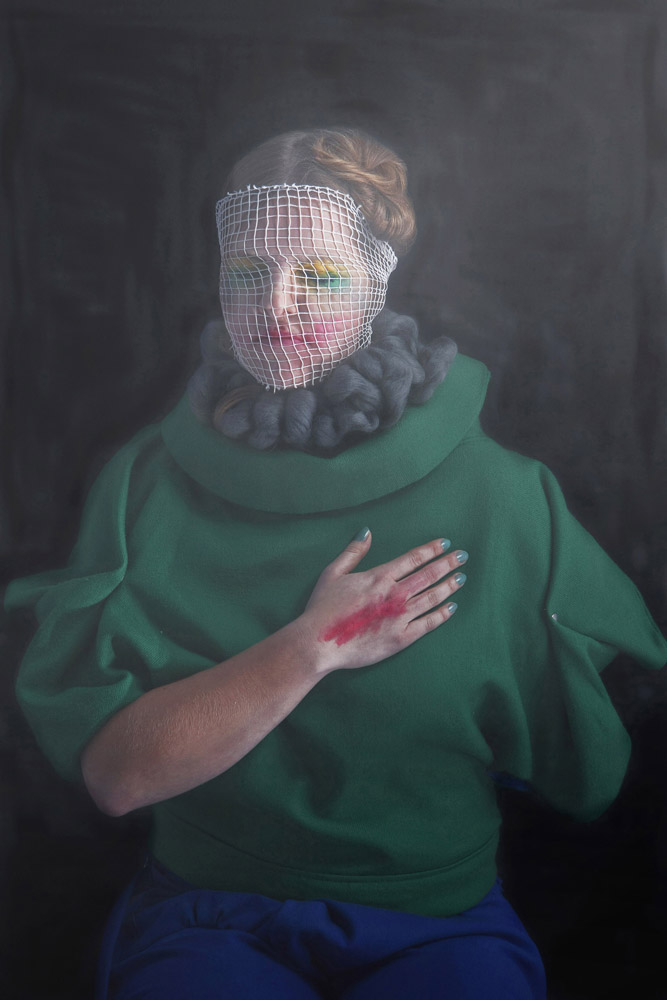
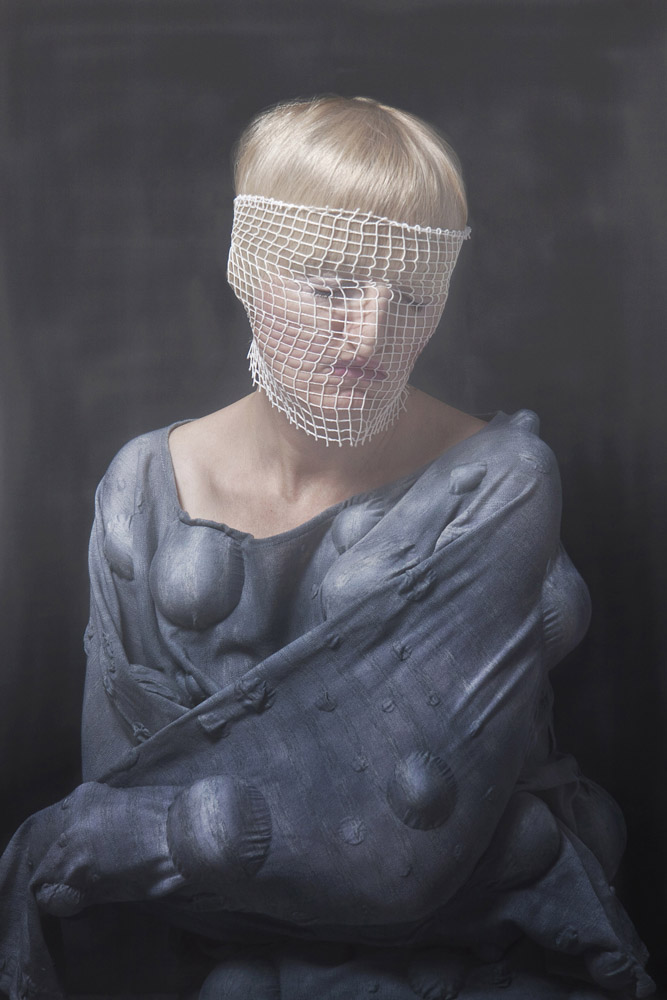
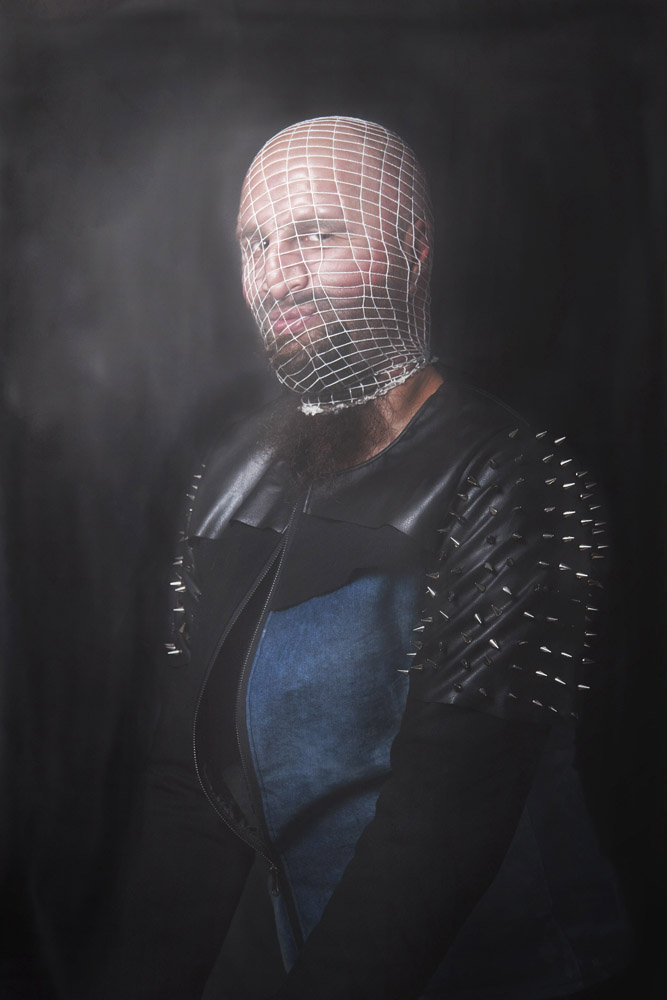
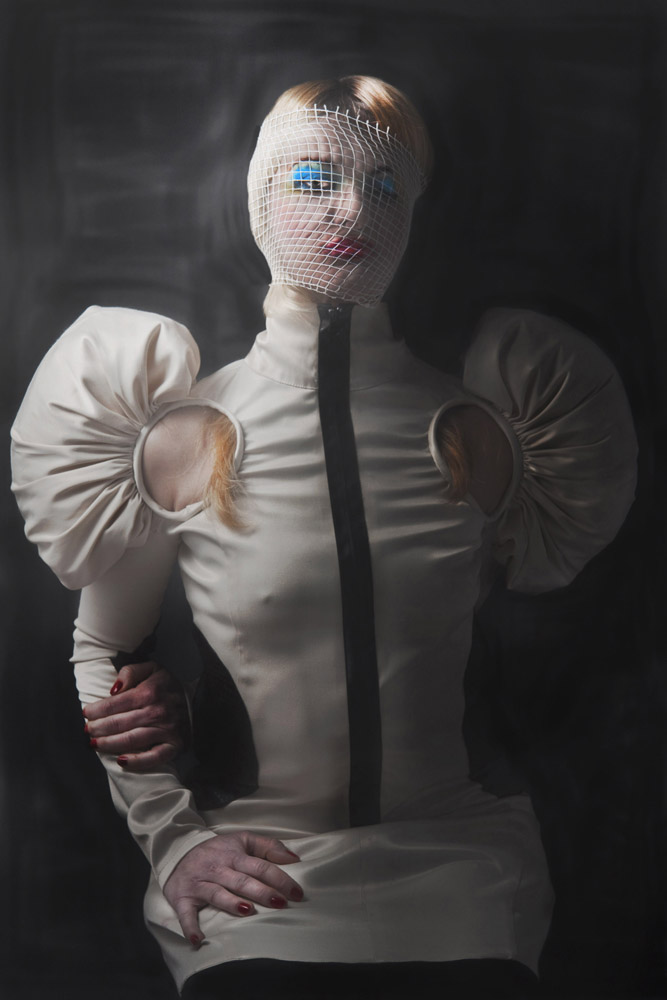
Although the face seems to be the main theme here, the perception of the costume seems to
come to the fore. The portrayed are dressed in original single collections of young Polish
designers Małgorzata Wasik , Natalia Jezierska, Lidia Sajdak, Paweł Pyzik. The clothes
they are wearing not only refer the viewer to modern times, but also they go beyond. The
intention of the author was to presuppose that the audience would be able to analyse and
identify with that gear.
According to Maria Anna Potocka’s definition, a portrait is an act of gripping human face.
In the art of painting it serves presenting a person to the others or providing that
person with continuous presence . The identity of the portrayed in this very series
consists of the following elements: clothes and gestures. By the fact of positioning the
object against a dark background and the use of a proper light by the photographer, the
recipient may get the impression that what they look at is a painting indeed, not a
photograph. After all, Roland Barthes wrote: the spirit of Painting would bother, and
still does, the Photography . In this cycle a specific concept of beauty is contained, yet
the beauty is displayed in a manner characteristic for the author, disturbing.
Photography in general is used to represent a human being and the mission of a
photographic portrait is to illustrate the portrayed as much as possible embodying their
likeness. In a situation when the face becomes blurred by distorting the features, an
attempt to penetrate the facade of the represented person is discarded. By the fact of
veiling the faces of all of the portrayed Townspeople, one can get the impression that
what they look at are mere puppets derived from a common place, yet on whom there was
inflicted a semantic death. Although each character is wearing a different outfit chosen
by themselves, in the analysis one can only point to the characteristics of general
physiognomy, for example the type of the muscularity, length and colour of hair or beard.
With these features we can recognize gender or physical condition of the model, such as
pregnancy, however, the recipient cannot give the exact description of the Townsman.
Supposing these people do not have set names with which we can identify them, and if they
do not have a proof of their identity in the form of facial features, as facial
physiognomy in this case cannot be included in the individual characteristics, they may
not be considered in the category of total individualities. They seem to represent a kind
of pulp. Nevertheless, until the end of the formal activities associated with the session,
the photographer still has to deal with a subject, who further, through treatments related
to the preparation of the shooting, turns into an object, objectifies in the eyes of the
artist. From a unique individual he/she changes into a material being devoid of
personality, they constitute a matter from which a photographer creates an object with the
intention of further reading to provide with ideas.
Among others, the above observations made during multiple photo sessions and reflections
arising from them led me to undertake research on the broad sense of identity in the art
of photography. A series of "The Townspeople" is the first collection manifesting my
observations in this field. With empathic skills, I feel that the creation will be
received in terms of desire and denial, but primarily it is about meeting the need for
action, expression, dialogue with the social or personal situation. This action is always
accompanied by catharsis.
Patrycja Pawezowska was born in Poland. She is a member of Association of Polish Art Photographers and a PhD student at the Academy of Fine Arts in Katowice at the Graphics Workshop Department, under the supervisor prof. Ewa Zawadzka. She deals with creative photography and expresses herself in terms of the widely understood portrait. An important element of her photographs is colour, but she fancies black-and-white minimalism, too, beautiful ugliness and balancing on the edge of kitsch. In the artistic field she enjoys designing the real world of an unreal structure. She is a winner of many competitions. She has had individual and collective exhibitions all over Poland and abroad.
Awards Patrycja Pawęzowska was born in 1977 in Będzin, Poland. She is a member of Association of Polish Art Photographers and a PhD of Art. She deals with creative photography and expresses herself in terms of the widely understood portrait. An important element of her photographs is colour, but she fancies black-and-white minimalism, too, beautiful ugliness and balancing on the edge of kitsch. In the artistic field she enjoys designing the real world of an unreal structure. She is a winner of many competitions. She has had individual and collective exhibitions all over Poland and abroad.
Individual Photo Exhibitions:
Sosnowiec 2008 "Welcome to My Gothic and Sex Broadcast"
Kraków 2008 "The End of Summer"
Sosnowiec 2009 "My Mattervisibility"
Będzin 2009 "Enchanted with Your Story"
Sosnowiec 2009 "Alien Kitsch Project"
Bielsko-Biała 2009 "Murder Ballad"
Katowice 2011 „ Humantria” Kawtowice Negative Galery
Rybnik 2014 "The citizens. The frame and beyond "IFF Rybnik
Collective Photo Exhibitions:
Częstochowa 2009 "Cyberfoto" After competition exhibition
Żary 2009 XIX National Salon of Artistic Photography Żary `2009
Częstochowa 2010 "Cyberfoto" After competition exhibition
Katowice 2010 "Cyberfoto" After competition exhibition
Sosnowiec 2010 “ One day Exhibits”
Poznań 2010 “ Erotic in women’s eyes”
Sosnowiec 2011 “ One day Exhibits”
Częstochowa 2011 "Cyberfoto" After competition exhibition
Bielska-Biała 2011 FotoArtFestival wystawa FotoOpen
Belgrad 2012 r „ Monochromatski svet”
Torun 2012 r "What lies at the bottom of the eye" Carriage House Gallery
Sosnowiec 2012r "In the Footsteps of John Kiepury" Exhibition of landscape paintings
Piotrków Trybunalski 2013r Second Biennial of Art in Piotrków
Varna 2013 r FIAP Salon Varna
Siemianowice Śl. 2014 "Let me tell you about Silesia" City Museum
Sosnowiec 2014 "Diversification of art" Gallery Extravagance Sosnowiec Art Center - Castle Sielecki