Iñupiat: People of Whaling
-
Prize
-
PhotographerLuciana Whitaker, Brazil
-
StudioLuciana Whitaker
-
Socials
-
Website
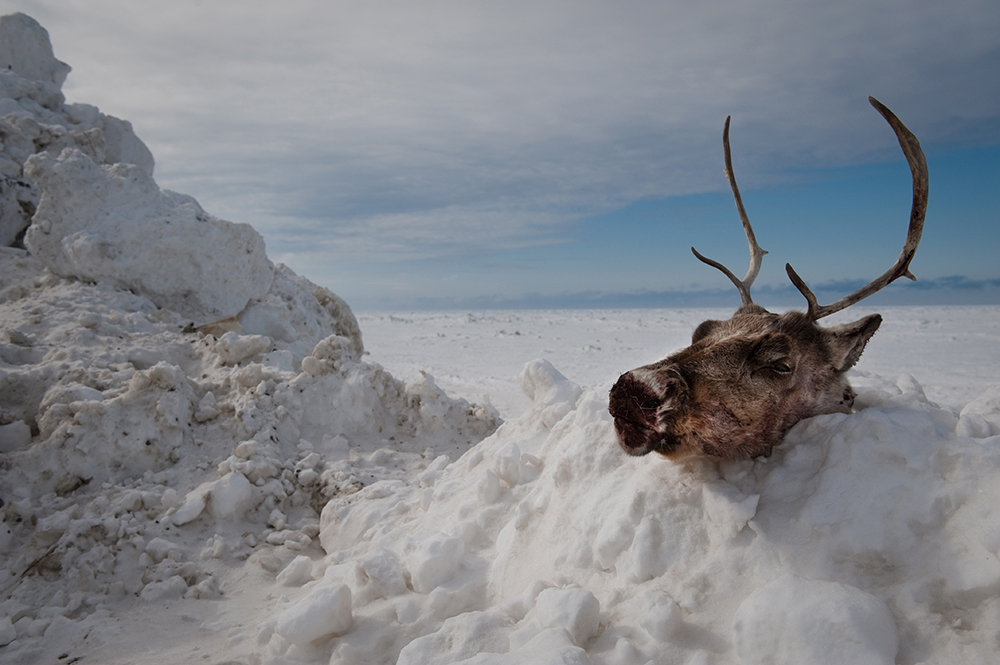
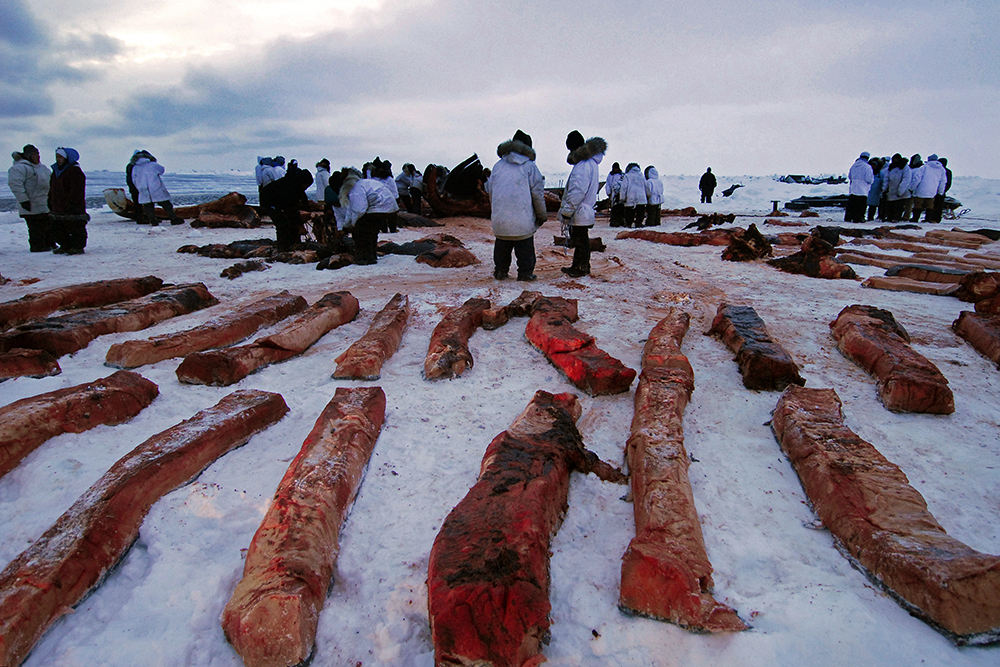
PEOPLE OF WHALING: On the northernmost point of the continental Americas lays a small
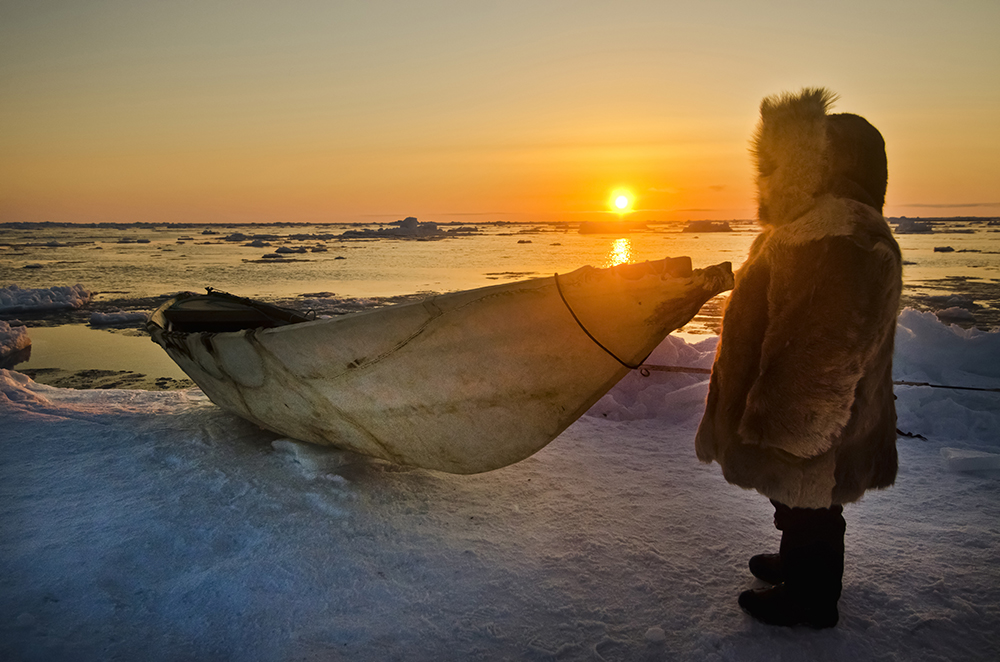
native village of 4000 people, where the Iñupiaq camp on the Arctic Ocean ice every spring
to hunt for Bowhead whales on wood-framed rowing boats covered with seal skins, sewn by
the women. This is a subsistence hunt that dates to antiquity and is limited to a quota,
based on whale population census. The pod is growing. The Iñupiaq connection to the
natural resources is essential to the community sense of identity. Whaling is the foremost
way where they express this connection because of the hunt’s communal nature and the whale
sharing. Hunting is vital not only to the body, but to the culture and its preservation.
The Iñupiaq is taught not to deplete their renewable resources, but to treat land and sea
as their garden. They are an example of sustainable community but are threatened by
climate change. Their garden is melting.
They are hunters who clean their ice cellars before every whaling season and leave unused
parts of some old hunt on the ice for the bears, foxes and birds to feast on. They camp on
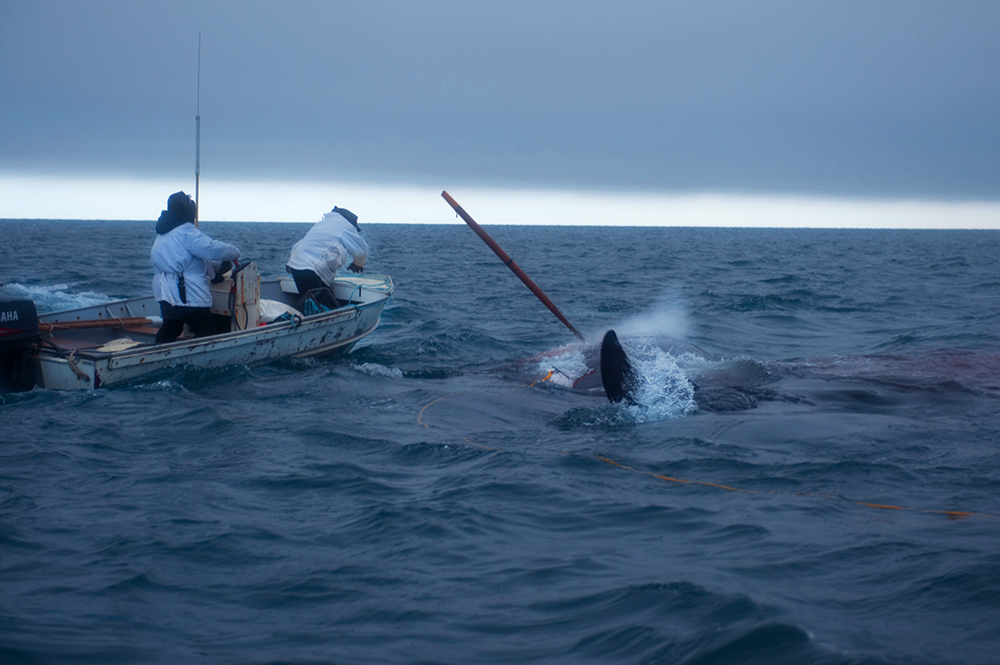
the edge of the ice like their ancestors did hundreds of years ago. They harpoon from the
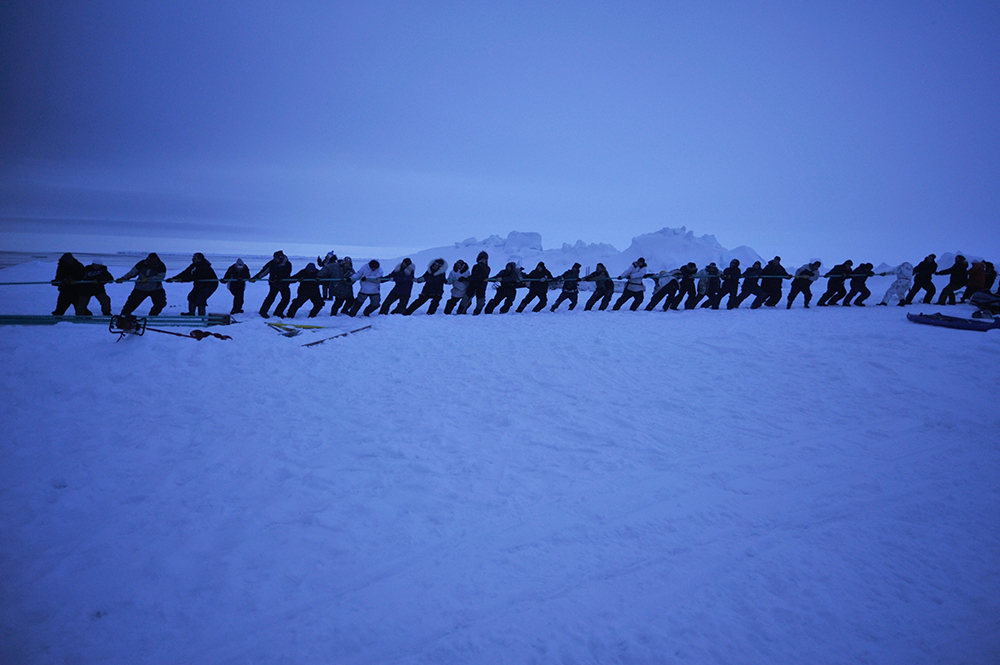
small native rowing skin boat and finish the chase with a small motorboat. They cooperate
with each other on the hunt, on pulling the whale up on the ice and butchering it. Nothing
is sold; nothing is wasted; only shared between each and everyone that helped.
-
BiographyLuciana Whitaker has never let boundaries get in her way. Graduated in Visual Communication in Rio, photographed for NY Newsday, worked as photo editor at Brazil's largest daily and lived with Iñupiaq Eskimos for 10 ys in Alaska, documenting sustainable whaling. Whitaker shoots for news and corporate clients in US, Europe and Brazil. Her photography is featured at the Smithsonian, Iñupiat Heritage Center and Alaska Contemporary Art Bank. In 2013 she took first prize in photojournalism for Latin America and in 2015 was part of Photo España. Whitaker was Photo Manager in the Rio 2016 Olympics.
-
AwardsCOLLECTIONS Alaska Contemporary Art Bank 2013 Ukpeagvik Iñupiat Corporation. Washington DC. Twenty photographs 2012 Smithsonian Arctic Studies Center. Anchorage, Alaska. Sharing Knowledge 2009 Iñupiat Heritage Center. Barrow, Alaska. 300 images 2002 Ukpeagvik Iñupiat Corporation. Anchorage, Alaska. Twenty photographs 2008 North-Slope Borough. Barrow, Alaska. 20 images 2007 SELECTED AWARDS International Photography Awards, USA, professional, Envirnonmental 2011 Michael H. Kellicut International, USA 2011 Trasatlántica PhotoEspaña 2011. Selected photographer 2010 The Millennium Photo Project, Canada. Judge’s Award Photo 2000 Best of Photography Annual, USA. Honorable Mention 1997 FINEP Salon of Photojournalism, Brazil 1995 Exxon Award of Journalism/Prêmio Esso, Brazil 1994 Folha de S. Paulo Award of Journalism, Brazil. Best Picture Published 1993 Nikon International Contest, Japan. Color Photography 1991/1992 Coca-Cola Award, ROCK IN RIO II, Best Picture 1991 SELECTED EXHIBITS A New Image of Latin America. Photojournalism, 1st place, Argentina 2013 Earth Through a Lens, Museum of Photographic Arts, San Diego 2012 Women’s Works 2012 25th Anniversary Show. Woodstock, Illimois, USA, 2012 Bergson Equivalents. Atelir da Imagem, Rio, Brazil, 2011 Michael H. Kellicut International Photo Show, USA 2011 Living Our Cultures, Sharing Our Heritage: The First Peoples of Alaska. Smithsonian Arctic Studies Center, Anchorage Museum, Alaska 2010 People of Whaling. Solo photo exhibit at Iñupiat Heritage Center Museum, Barrow, Alaska, USA 2004-2009 Whale Hunters. Solo exhibit, Museu da Republica, Rio, Brazil 2007 Quonset Huts: Metal Living for a Modern Age. Anchorage Museum of History and Art, USA 2005-2006 Down of the 21st Century: The Millennium Photo Project. International traveling exhibition 2000 FINEP Salon of Photojournalism 1995. National Photojournalism, FINEP Gallery, Rio, Brazil 1996 II Biennial of Photography in São Paulo. National Photojournalism, Brazil 1995