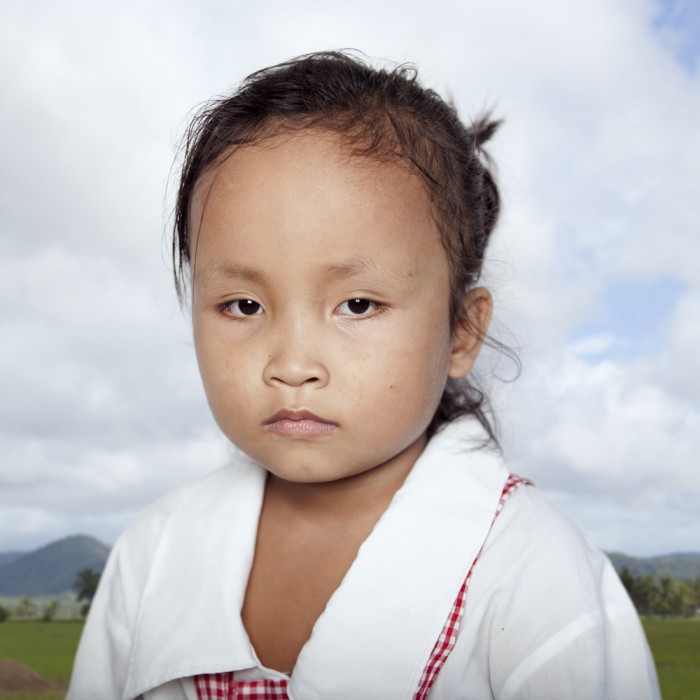
No Kid's Land
-
Prize
-
PhotographerAna Galan, Spain
-
Studioanagalanphoto
-
Website
States Parties recognize the right of the child to rest and leisure, to
engage in play and recreational activities appropriate to the age of
the child and to participate freely in cultural life and the arts.
(Article 31.1. United Nations Convention on the Rights of the child
(UNCRC)).
Eating, sleeping and playing are three basic needs for all children.
The first two seem obvious; the third however, is not always
understood and in some cases is disregarded.
Child labour has always existed throughout history, mostly in
assistance to the family in domestic or agricultural help. Playing
becomes an ephemeral and almost clandestine activity because
other responsibilities become a part of the daily life: taking care of
smaller siblings, fetching basic elements for the household (water
or wood for the fire to cook and keep warm), cleaning, cooking,
animal feeding… Most of these children go to school if the school is
nearby, but it's just in passing. The most important thing is to
contribute to the basic needs of the family. When a child plays while
working, he plays as an "adult", and cannot play as a "child".
Thus, in an inconspicuous way for society, a part of their human
condition is resigned to not play.
-
BiographyAna Galan was born in Madrid in 1969. After receiving her degree in Economics, she completed an International MBA, which entailed studying in three different cities: Oxford, Madrid and Paris. In the last two courses, she wrote a thesis addressing "Speculation in Plastic Art". Since 1993 she has combined her passion for photography with her profession, attending various courses in Paris and Madrid. After doing an MFA in Photography in 2009/2010 at EFTI, and after attending workshops with Pierre Gonnord, Eduardo Momene, Peter Bialobrzeski, Lynne Cohen, Matt Siber, Jose Ramon Bas, Eugenio Ampudia, Alejandro Castellote, Chema Madoz... her photography becomes more personal. Since then she has been finalist in various competitions such as Descubrimientos PHotoEspana in 2010 and also in 2011, in Madrid, Spain, in Emergentes Encontros da Imagem in 2010 and also in 2011, in Braga, Portugal, in the Bourse du Talent Portrait 2011, Paris, France, in the Px3 Prix de la Photographie Paris, France, in the Festival Emergent at Lleida 2010, Spain, in the Grunenthal Art Prize... she has received a Third Prize in the 2011 CENTER Dealer's Choice Award (selection by Dianne Vanderlip, Curator at Gagosian Gallery) and an Honorable Mention in the 2011 CENTER Editor's Choice Award (selection by Todd James, Senior Photo Editor at National Geographic). She has participated in several collective exhibits in France (Paris Photo, Espace Dupon at Paris, Rencontres d'Arles...), Italy (Primo Piano LivinGallery), India (Delhi Photo Festival), Spain (GetxoPhoto, FotoNoviembre, Festival Pa-ta-ta...), Malaysia (China House), Japan (Japan Media Arts Festival) and USA (CENTER Santa Fe, The Center for Fine Art Photography, United Photo Industries, Grizzly Grizzly Gallery...). She works as the marketing director for a magazine in Madrid, and lives between Madrid and Paris. Artist Statement. Ana Galan reviews the portrait formula that emerged in Italy towards the end of the 15th century, which associated, in painting, busts with landscapes. Realistic portraits that do not aim to idealize the subjects' features; they are fragments of an essence. People are reduced to busts, substituting through synthesis, the whole for the part. Figures placed in a raised position before a wide and idealized landscape. Windows, and at the same time, mirrors. Conflict between introspection and the projection of the subject inherent to strong portraiture. Transparency or reflection? More information at www.anagalanphoto.com