15-second | the other side
-
Prize
-
PhotographerAndrea Bosio, Italy
-
Date of Photographonline
-
Website
15 SECONDS
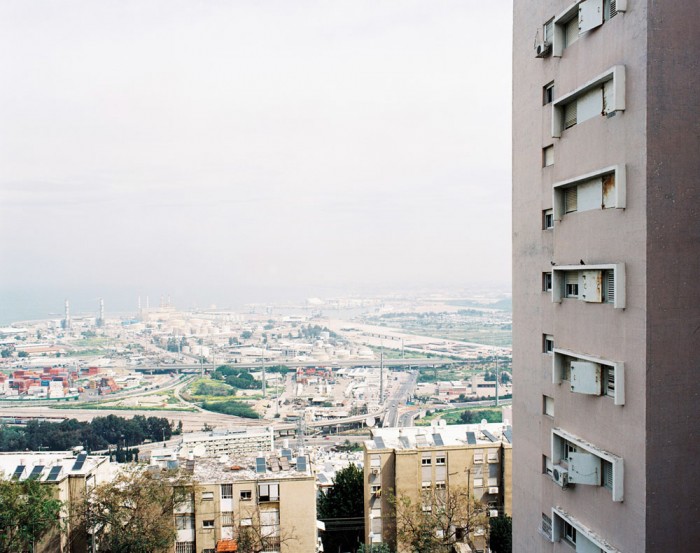
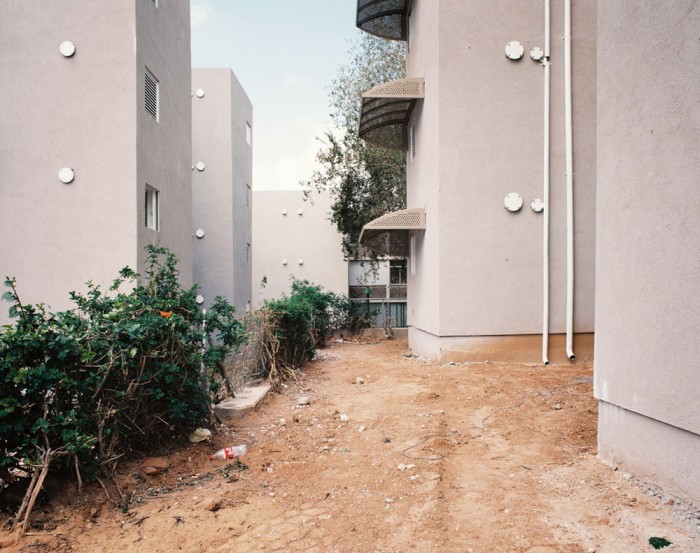
15 seconds or little more: that is the time Israeli citizens have to find out the nearest shelter in case of enemy bombing attack announced by the sound of sirens, particularly in cities near the Palestinian territories in the south of the country.
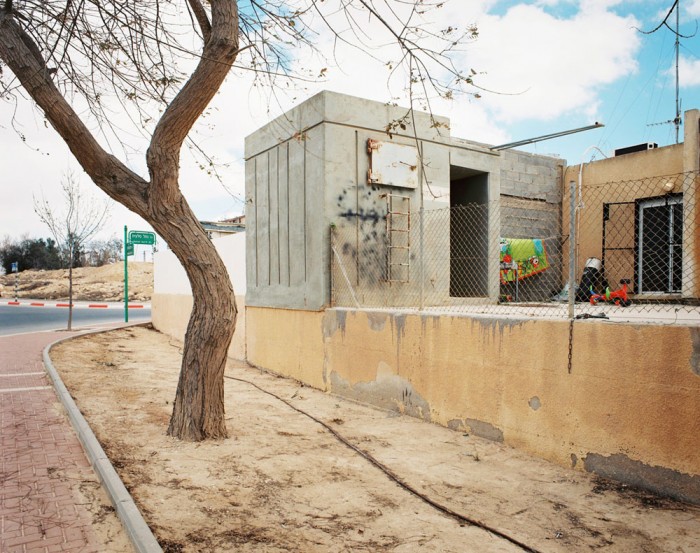
Each building is designed considering the presence of a bomb shelter in it: in the oldest they take place in an underground room available to all tenants of the building, while in the most new construction is a concrete reinforced cell, placed on each floor and in each apartment and set up and used as a standard bedroom or study.
From 'outside is easy to recognize the heavy steel windows which draw a clear vertical line on the façade of the buildings.
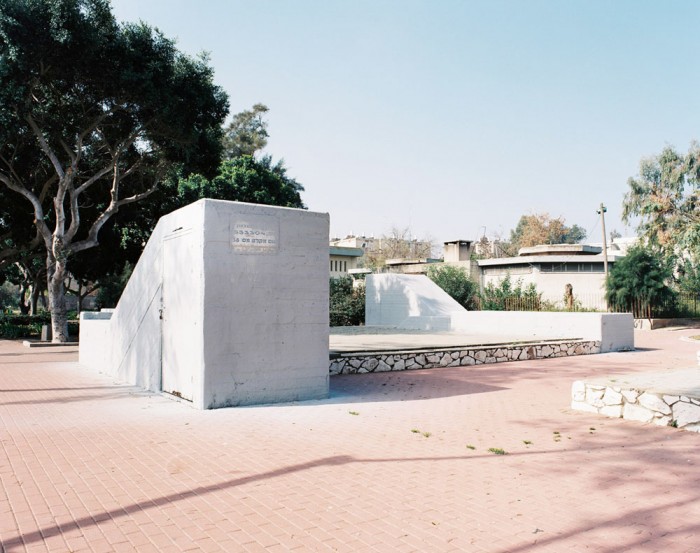
In public open spaces, especially near gardens and gathering places is easy to distinguish structures in reinforced concrete with doors and windows and features air vents.
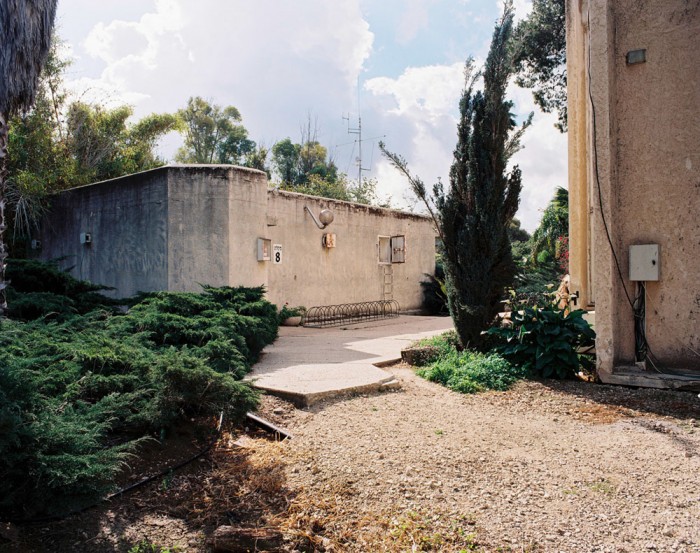
Even in most of the Kibutz outside the cities there are some bunkers: some of tham, the newer, are built with prefabricated material and placed in the green areas between house and house.
If in cities such as Tel Aviv these objects appear like "forgotten", in other situations at greater bomb risk, as in Sderot in the south, the bunkers are ready to use and even continue to be built and added to homes that are still lacking.
On a trip from north to south to the border with the Gaza Strip, I researched for the silent artifacts between buildings, public spaces and in private homes: this series of images shows the presence of these refugees in the normal everyday life.
The photographs were taken in some of the major Israeli city with a medium format film camera .
-
BiographyANDREA BOSIO Born in Genoa on 25 Lugio 1980. 2001-2007. Architecture and photography studies in Genoa (Italy) and Lyon (France). 2007. Degree in Architecture with a thesis about photography and public spaces: "Building The Negative".            Selected for the project Linkinart - Berlin - Germany.          "The Real Estate" - group show - Metro Gallery - Berlin - Germany.            Selected for the Biennale dell 'Arte Contemporanea - JCE - France, Spain, Portugal, Austria,            Lithuania and Italy.           2008. Selected for the ARP with a photography project about the city - artist residence program in Montrouge - Paris.             Personal exhibition "Living Montrouge" at the 'ateler "Apartament 202" - Montrouge (France).             "Flatmates: Interculture in Genoa" - group show - Palazzo Ducale - Genova - Italy. 2009. BEYOND the wall - Museums - Pavia - Italy.            Time travel - Palace Broletto - Pavia - Italy.            Selected as a finalist for the KL Photo Awards.            Kuala Lumpur Photo Awards - group show - Annexe gallery - Kualalumpur - Malaysia.            Humanites? - group show - Grenoble - France.            La Grande Bouffe - group show - Genoa - Palazzo Rosso - Italy.            Germination - group show - Palazzo Penna - Perugia - Italy.            IN.Comunicazione - Scalinata Borghese - Genoa - Italy. 2010. Movimantazioni - group show - Palzzo Ducale - Genoa - Italy            La Grande Bouffe - group exhibition - La Spezia - Italy Most Important Pubblications Domus-Arca-Abitare-Il Secolo XIX, La Repubblica (Italia), Vice Magazine, Los angeles Times, (USA), Delicious Magazine, Master Chef Magazine (Australia) Wallpaper, Phaidon (UK)