Cuba—Hasta Siempre
-
PhotographerMAGDALENA SOLÉ is an award-winning social documentary photographer. Whether richly saturated or time worn, Magdalena uses color to encapsulate a range of feelings. She is known for her sensitive expressions of culture through distinctive color artistry. Her book “New Delta Rising”, published by the University Press of Mississippi, was released in February 2012. The Wall Street Journal in February 2012 called her images: “lushly colorful, formally striking, restless, and electrifying.” Her newest book is titled "Cuba—Hasta Siempre". She has been widely exhibited in the US, Europe and Asia. Solé teaches workshops with PhotoXpeditions and lectures internationally on photography. Her photographs are part of the permanent collection of the Fotostiftung Schweiz (The Swiss Foundation of Photography)., United States
-
StudioSolePictures
-
Website
CUBA—Hasta Siempre (Cuba—Forever)
When I arrived in Cuba for the first time, I was transported to the
time and place of my childhood in Spain. It was so unexpected. My
childhood Spain was pre-modern, but with time for family and
friends, conversation, home cooking and writing letters with
stamps. As I visited Spain over the years, I have watched the
country enter the modern age, where progress and economic
growth has made it sparkling clean and well organized, but with
fewer human interactions not defined by a smart phone. The loss
of my childhood Spain filled me with a profound melancholy,
which remained an undercurrent in my art until I found Cuba, or
better, Cuba found me.
When I started documenting Cuba in 2011, front-page stories
used to be premature obituaries of Fidel Castro, rather than
analysis or news as to what has become of the Cuban people and
their aspirations. Poverty, primitive agriculture, lack of modern
goods, ration cards and a dual currency system have plagued the
country for the past 60 years, following the revolution. All made
worse by Russia and Venezuela, once Cuba’s strongest allies,
withdrawing aid, as their own economies faltered. This has taken a
great toll on the Cuban people who would prefer to embrace the
riches of its wealthy neighbor, the US.
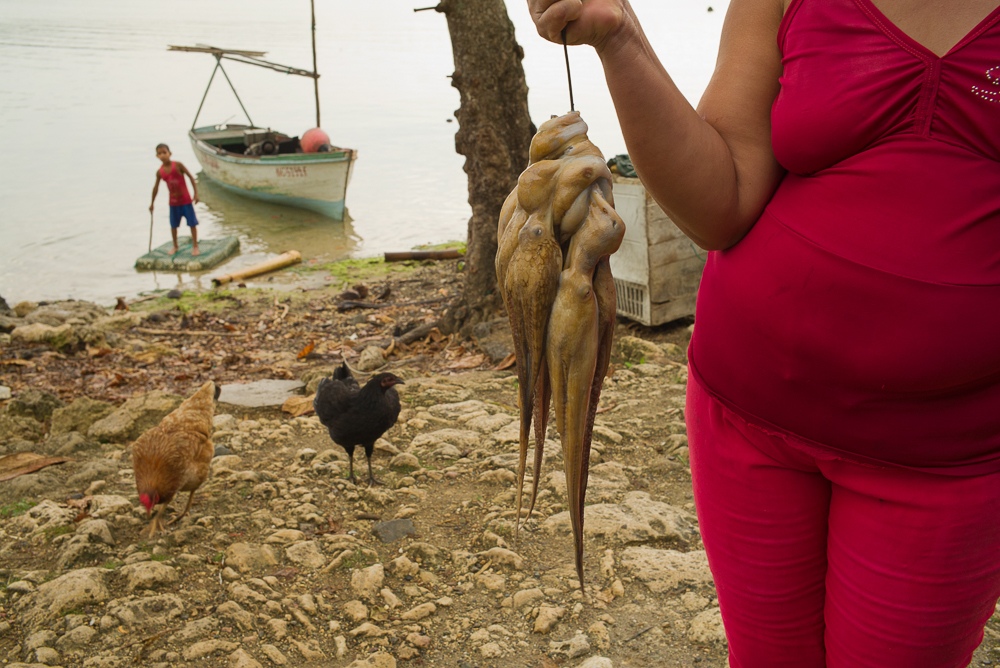
Cuba has a simplicity and joy that no longer exists in our modern
society. Even in a large city like Havana, children play on the
street, while the family sits in front of the house watching the
comings and goings.
My goal, as a photographer, is to reveal the transformation,
however subtle and hard to see. I hope to document the change
that is gripping a country that has remained mired in the 1950s
and 1960s.
-
BiographyMagdalena Sole is a social documentary photographer. Her projects span the globe from Japan, Brasil, to the US. Visual language has been her life's work, in 1989 she founded TransImage, a graphic design studio in New York City creating publications for worldwide markets. In 2002 she graduated with a Masters of Fine Art in Film from Columbia University. Her last film, Man On Wire, on which she was the Unit Production Manager, won an Oscar in 2009. Born in Spain, raised in Switzerland, she arrived in New York City in 1984, where she lives with her family. She works as an independent photographer. Her work has been shown in museums and galleries and has won numerous awards. www.solepictures.com