Sezatoare
-
PhotographerKathleen Laraia McLaughlin, United States
-
Website
This re-photographic project follows my 2011 book, The Color of
Hay: The Peasants of Maramureș, which spans an eight-year
period documenting farming culture and traditional peasant life in
northern Romania. This area is home to some of Europe’s largest
traditionally managed grasslands, which store the vitality of
summer’s grass as food for the coming years. “Sezatoare,”
(pronounced Sha-za-tua-re) is a time and place when women
gather to work on weaving, embroidery, and other textile folk
crafts while sharing stories. These images are one part of the
“Sezatoare” project.
In 1999 I began to witness and visually document the traditions
and cultural practices of the Maramureș rural peasantry. I have
seen the impact of modern life on traditional farming practices,
religious ceremonies, folk costumes, and local fashion. The
peasant experience in Maramureș is similar to what agrarian
peoples have experienced elsewhere around the globe, especially
those communities that have come into direct contact with
urbanized cultures. Like in many parts of the world, residents in
developing areas often want to catch up and feel modern, and so
no longer place value on things they associate as “primitive” or
“backward.”
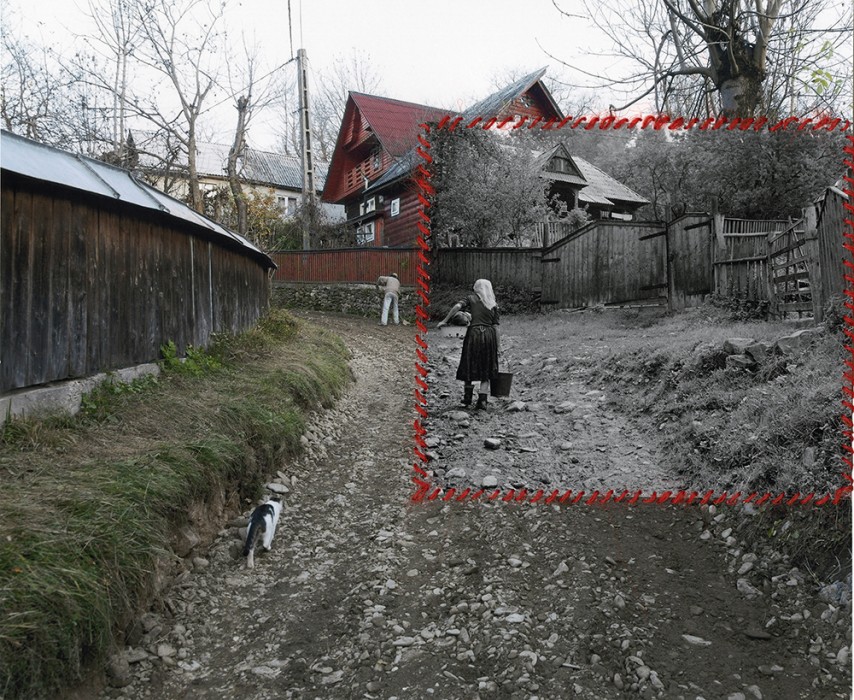
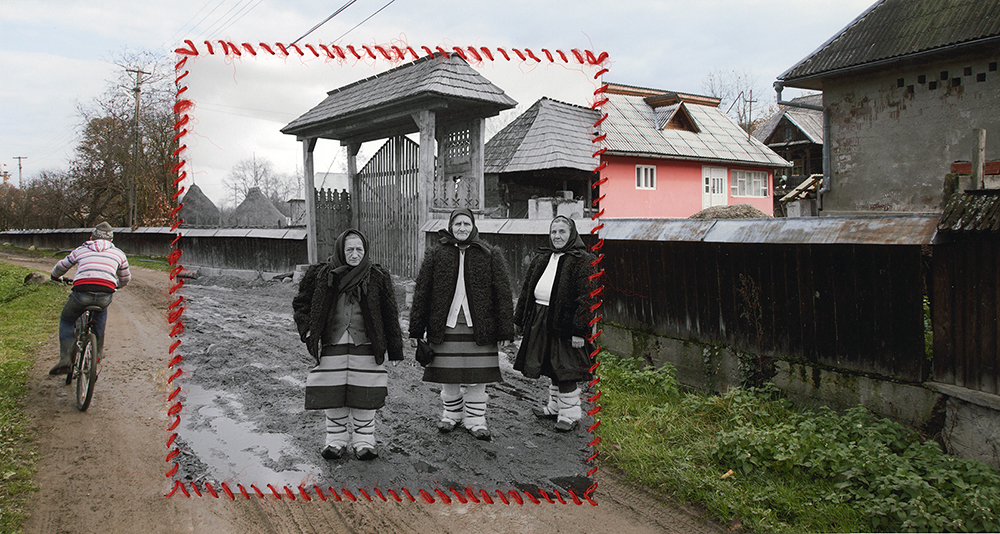
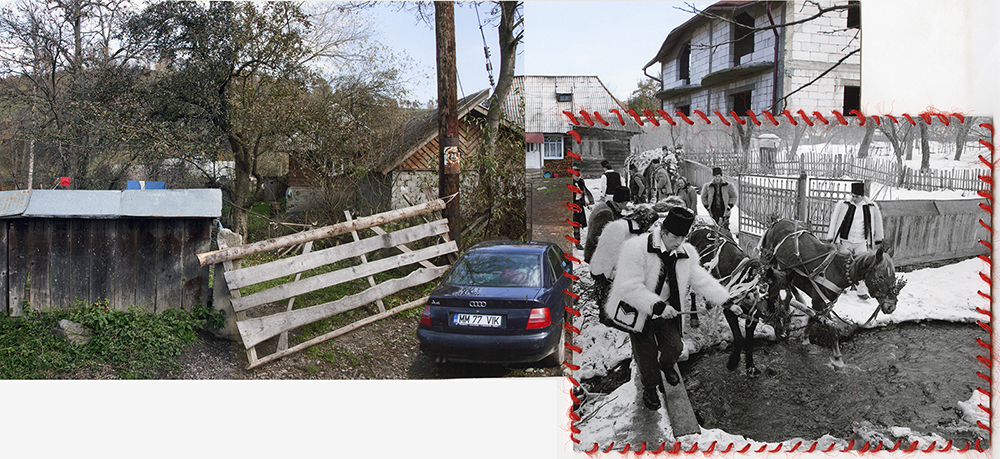
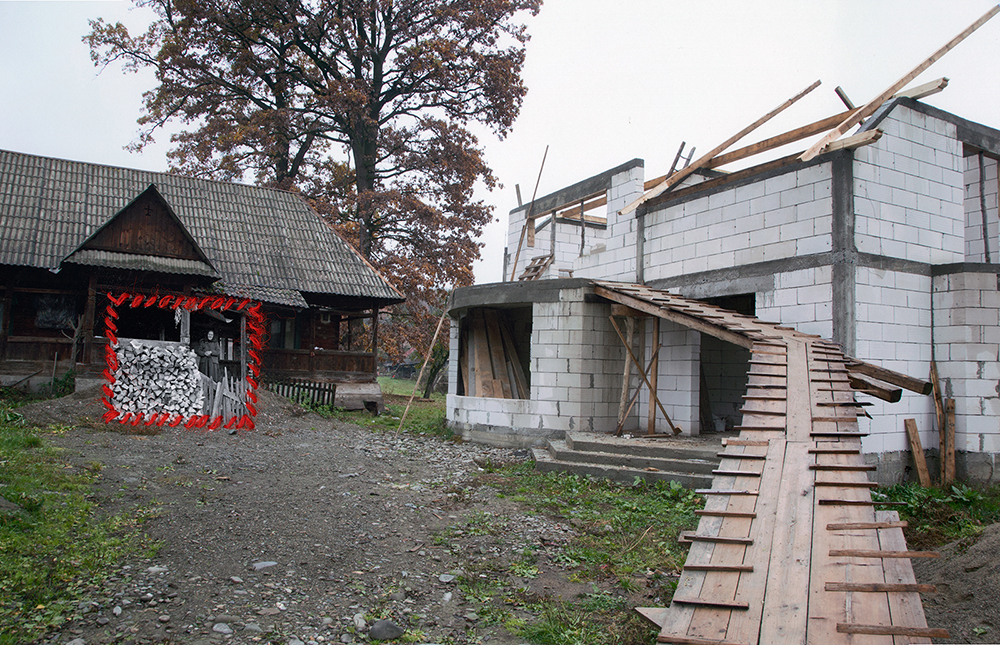
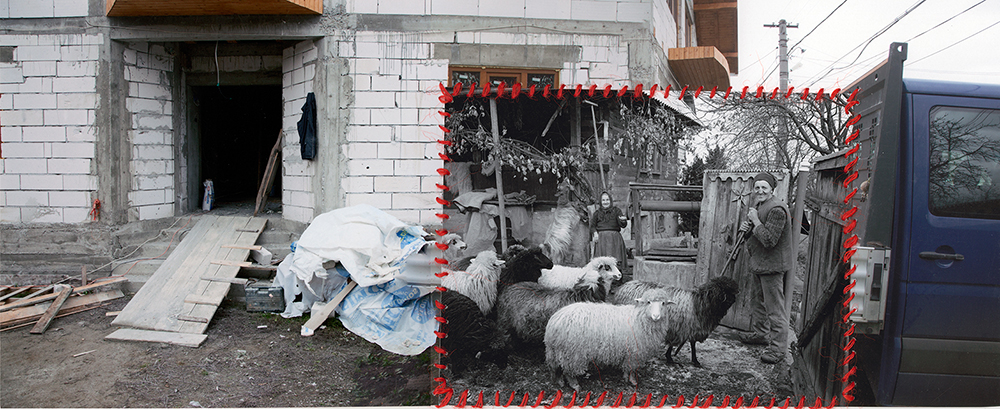
In 2012, I began to re-photograph some of the places I knew well
in the village Sarbi, where I lived for a year in 1999. The color
photographs are from 2012 and the black and white photographs
are from 1999. Each photograph is printed, then hand-stitched
together by me, with woolen thread that I unraveled from an old
woman’s apron. These aprons (zadii) are worn daily by many of
the older women.
-
BiographyKathleen Laraia McLaughlin is a mother, photographer, and educator with an appetite for exploring the world. Wherever she goes, she brings a compassionate and curious lens backed by traditional film. For her efforts at capturing a disappearing world, she has received a Fulbright Senior Scholarship, an IREX IARO Grant (National Endowment for the Humanities), and a Houston Center for Photography Fellowship for her work in Romania. Her images have appeared in PDN, LensWork, Rangefinder, B&W Magazine, Black + WhitePhotography (UK), and The Times Saturday Magazine (UK). Her photographs have been exhibited both nationally and internationally and are in the permanent collections at the Museum of Photographic Art in San Diego, Western Virginia Museum of Art, and the U.S. Embassy in Bucharest. The Color of Hay: The Peasants of Maramures is Kathleenâ??s first monograph of photographs. This book was released in March, 2011. (www.colorofhay.com). Kathleen received her MFA in Photography from Virginia Commonwealth University. She currently is Adjunct Faculty at Loyola Marymount University and at the Academy of Art University San Francisco (online). Kathleen has been an active member of the Society for Photographic Education and was on the West regional board for four years. You can find more about her photography at www.klmphoto.com.
-
Awards2014 Artist Exhibition and Travel Grant, Honghe Photography Festival, Yunnan, China; 2014 National Geographic Traveler Magazine, December/January issue, Best of World Feature Story, reproduction, Washington, D.C.; 2013 Cultural Journalist Grant, Romanian Cultural Institute, Bucharest, Romania; 2012 Artist Lecture and Exhibition Travel Grant to Romania, United States Department of State; 2012 Honorable Mention, The Color of Hay: The Peasants of Maramures, Los Angeles Book Festival; 2012 A Survey of Documentary Styles in Early 21st Century Photobooks, Indie Photobook Library; 2011 LensWork Extended #95, multimedia publication, 39 images and audio interview, Anacortes, Washington; 2011 Runner-up, The Color of Hay: The Peasants of Maramures, London Book Festival; 2011 Artist Lecture and Exhibition Travel Grant, Xiang Sha Wan Photography Week, Inner Mongolia, China; 2009 Documentary Finalist, Worldwide Photography Gala Awards; 2006 Excellence Award, B&W Magazine, Arroyo Grand, California; 2005 Winner, Top 50, Critical Mass, Photolucida, Portland, Oregon; 2004 Photography Fellowship, Houston Center for Photography, Houston, Texas; 2003 Fulbright Senior Scholarship Council for International Exchange of Scholars, Washington, D.C.; 2002 Individual Advanced Research Opportunities (IARO) Fellowship, International Research & Exchange Board; National Endowment for the Humanities Fellowship, Washington, D.C.