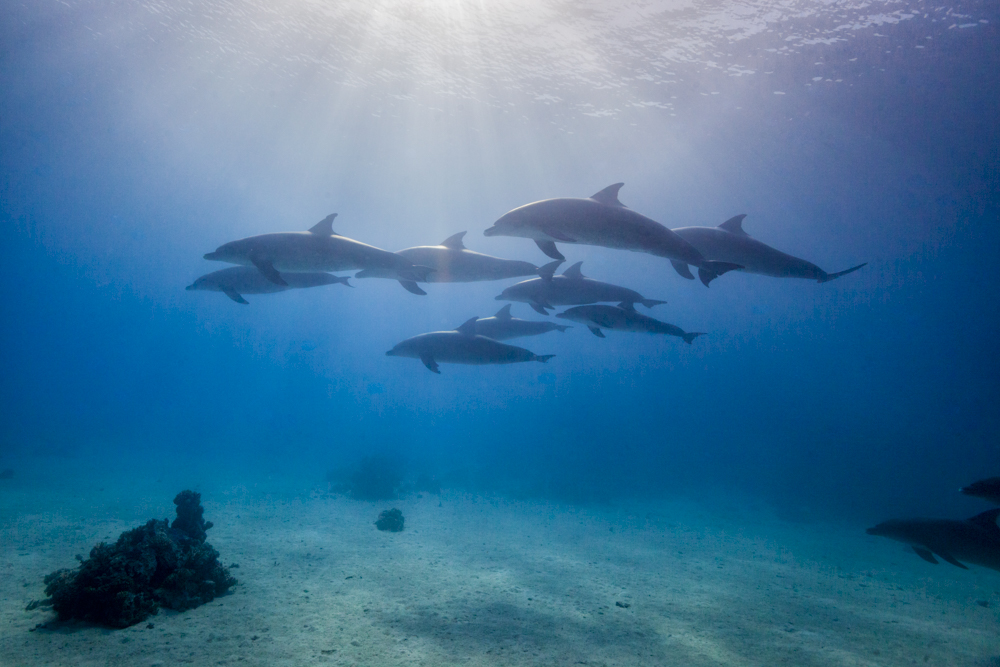
Egypt's Threatened Dolphins
-
PhotographerGrant Stirton, Canada
-
Website
Few animals in the world can claim to be both asleep and awake in the
same breath. Unlike humans and other land mammals, whales and
dolphins must breath voluntarily in the marine environment. They
have developed the ability allowing half of their brain to rest, while the
other side is awake. One eye is closed and the other remains open.
Every so often they switch and repeat the process.
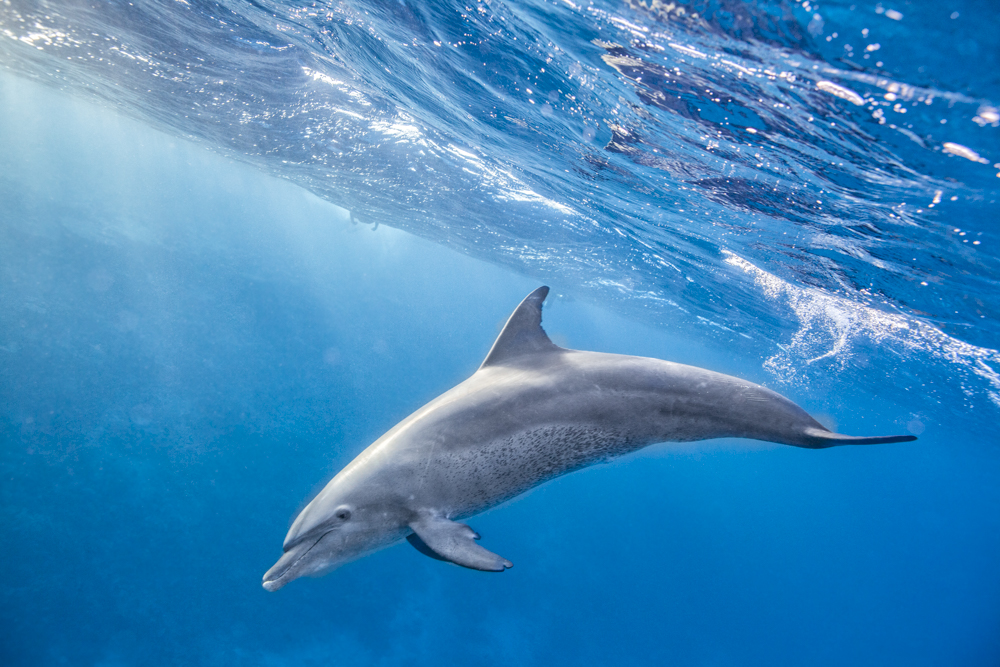
Hurghada, a picturesque Red Sea resort in Egypt, is home to a group
of about 200 bottlenose dolphins. Each day while sleeping in small
groups, they slowly meander through the numerous shallow coral
reefs stretching along the coast line. This predictability, combined with
their familiarity with divers, have made them excellent research
subjects for a local conservation group, ‘Dolphin Watch Alliance’.
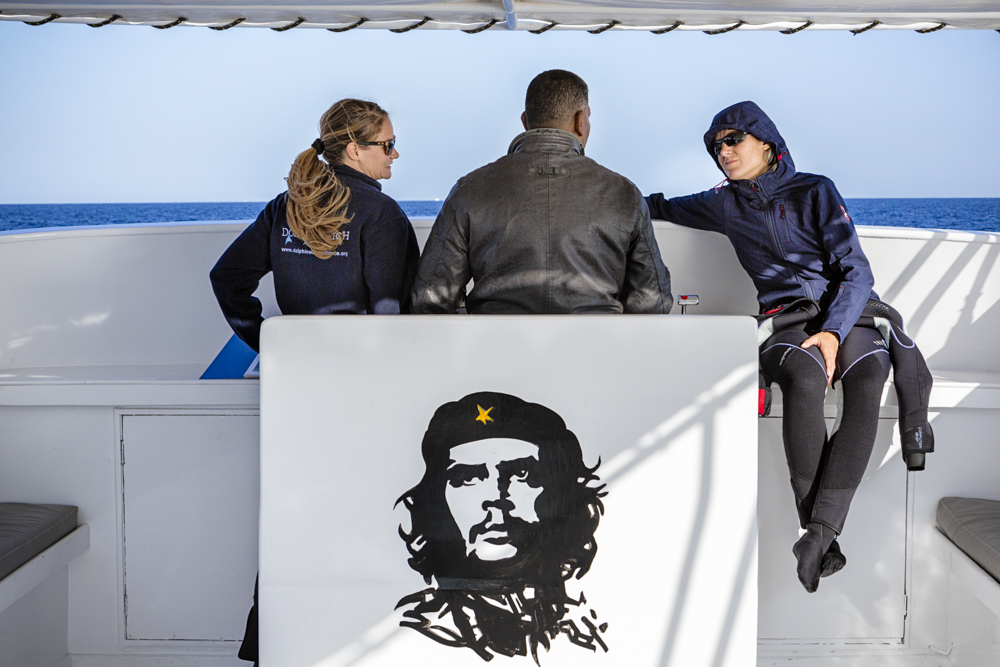
Leading efforts are two young marine biologists. Courageous and
perseverant, over five years they have observed, gathered data and
educated.
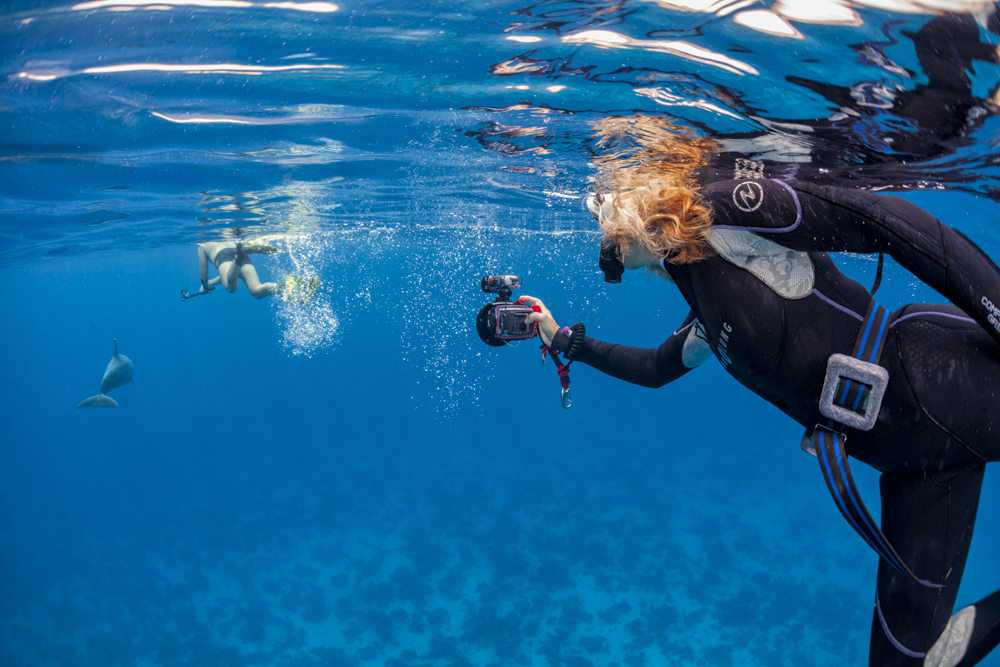
Recognizing an opportunity, a slew of tour operators offer 'once-in-a-
lifetime’ dolphin swimming encounters. During high season upwards
of 50 boats have been observed, competing for position in an attempt
to chorale the dolphins and give their snorkelers the best chance of
catching the dolphins . Although some are qualified and
environmentally conscious, most are out to make a quick profit. The
result is highly unsafe boat traffic, poorly trained staff and groups of
tourists being launched into swim with sleeping dolphins.
As is the case in many similar situations, a small collection of
dedicated individuals, through combined efforts, are helping to raise
awareness and conserve one of the planet’s most recognizable and
threatened species.
-
BiographyGrant Stirton is a photo-based artist residing near Ottawa, Canada. Specializing in marine environments, his passion for exploring the natural world is informed by his experience as a photojournalist and marine expedition guide. His practice is a synthesize of modern and historical process, as he works across digital and analog formats, producing hand-made platinum, silver and archival pigment prints. He is a graduate of SPEOS Photographic Institute in Photojournalism, the University of Toronto in Management and is currently an artist in residence with the School of Photographic Arts Ottawa.
-
Awards2022 Group Exhibition, RI Centre for the Photographic Arts, Black and White Exhibition, Providence, RI 2022 Group Exhibition, Red Bluff Art Gallery, Art 4 Animals, Rancho Tehama Reserve, CA 2022 Group Exhibition, Exhibitionzone, Emptiness (Online) 2015 Group Exhibition, AGORA Gallery, On the Rhino Front Line, New York, NY 2014 Group Exhibition, Magnum Photos, Group Exhibition (SPEOS), Paris, France 2014 Group Exhibition, SPEOS Photographic Institute Student Exhibition, Paris, France 2022 ND Awards, 2nd Place – Professional Nature Category, Series, Underwater Statue Park 2015 National Geographic Online, Island's Assignment Editor's Selection 2015 Honourable Mention, PX3 Prix de la Photographie, Series 2015 Honourable Mention, PX3 Prix de la Photographie, Underwater Nature 2015 Honourable Mention, PX3 Prix de la Photographie, Defender in the Kalahari Night 2014 3rd Place, PX3 Prix de la Photographie, Underwater Nature