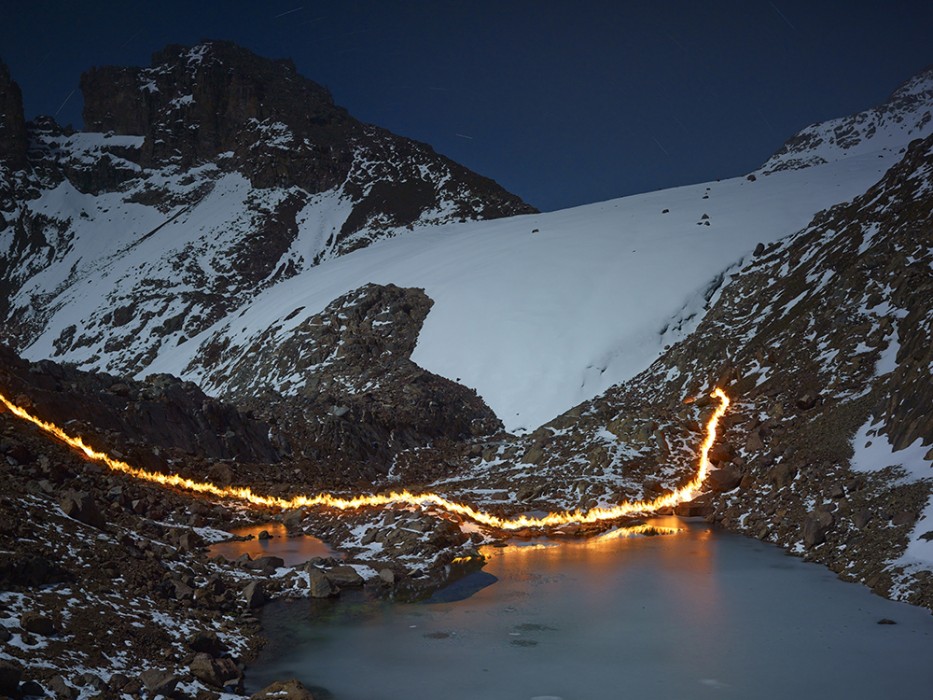
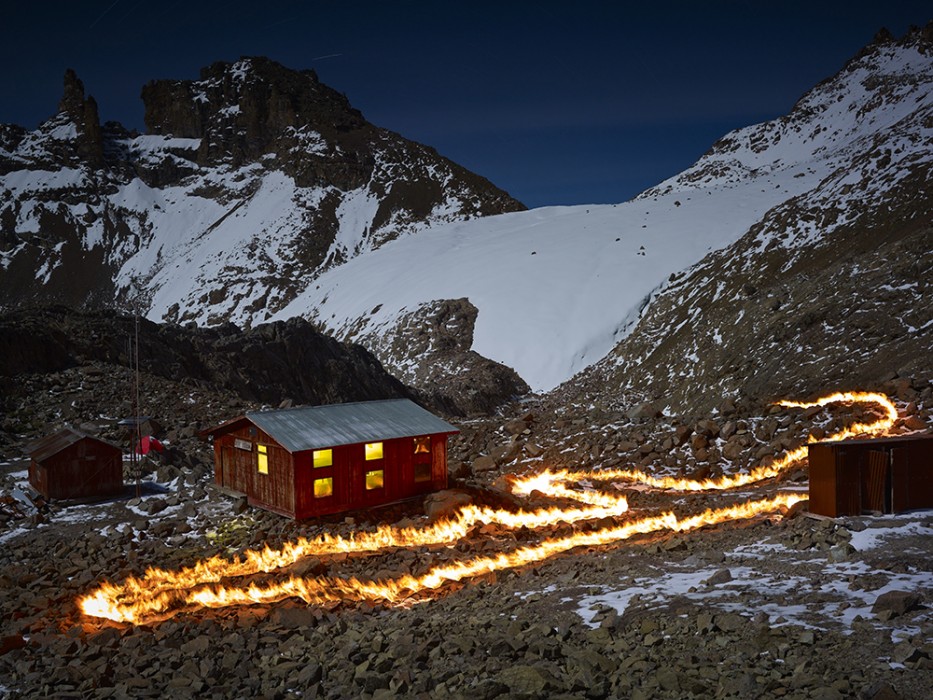
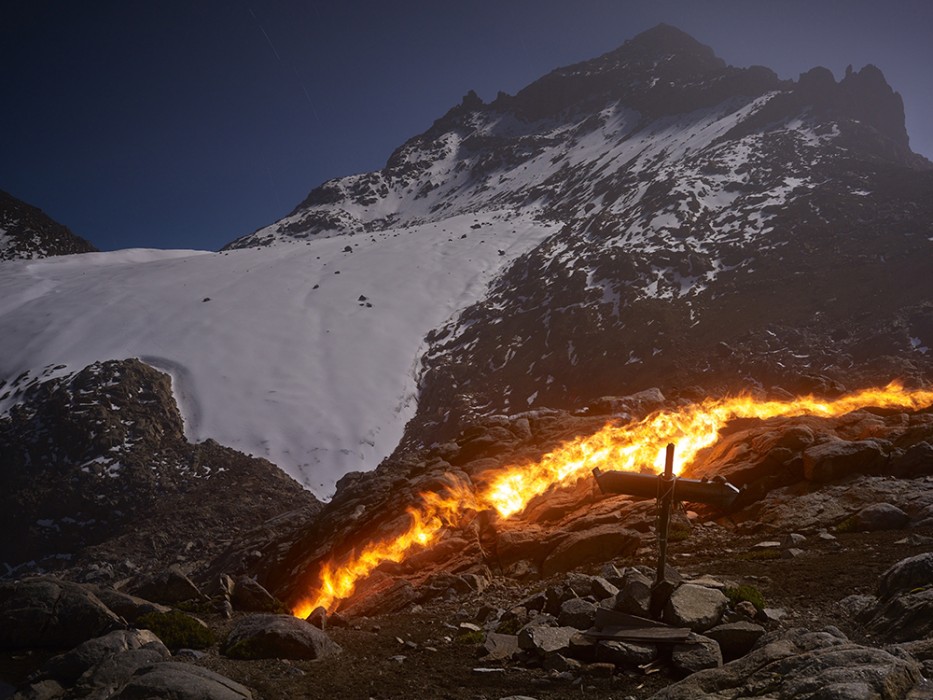
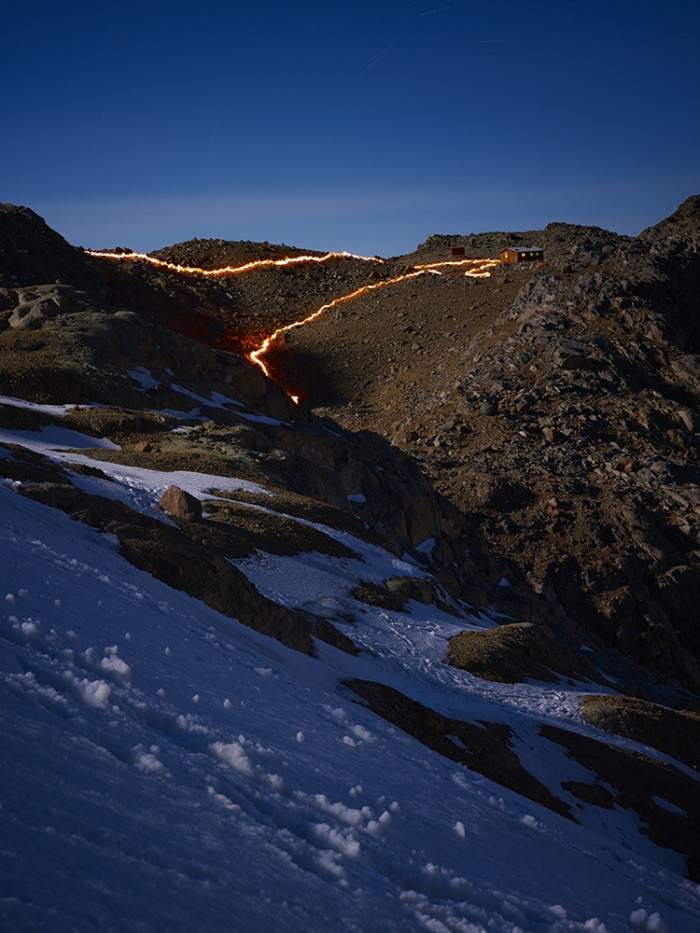
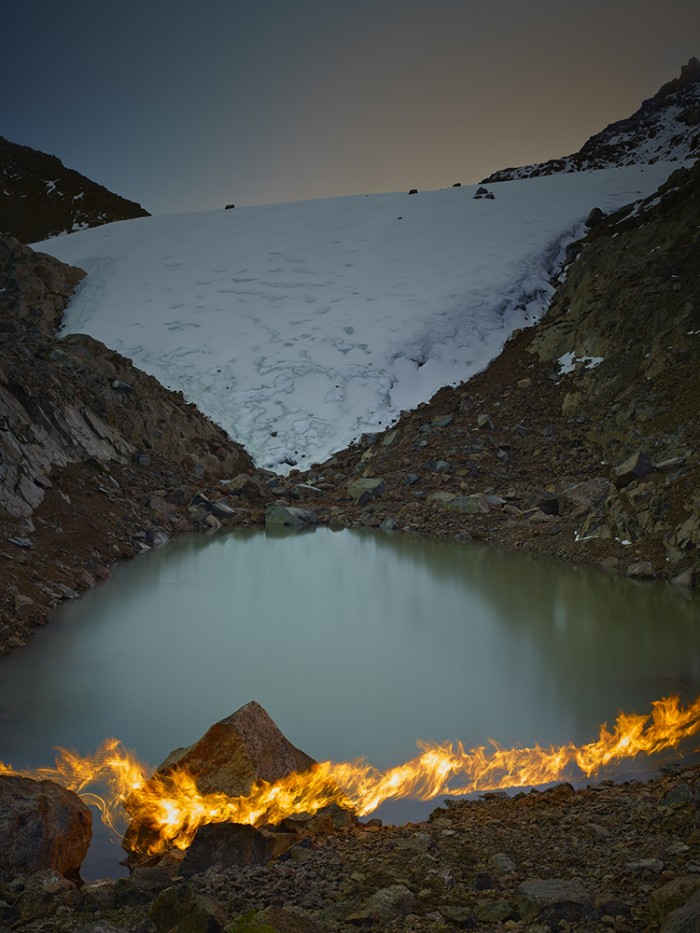
Mapping with a pyrograph, the melting away of the Lewis Glacier on Mt. Kenya.
-
PhotographerSimon Norfolk, United Kingdom
-
StudioMr
These fire lines I have drawn indicate where the front of the
rapidly
disappearing Lewis Glacier was at various times in the recent
past;
the years are given in the titles. A harvest moon lights the poor,
doomed glacier remnant; the gap between the fire and the ice
represents the relentless melting. Relying on old maps and
modern GPS surveys I have rendered a stratified history of the
glacier's retreat. Mount Kenya is the eroded stump of a long-
dead, mega-volcano. Photographically, I hope to re-awaken its
angry, magma heart. The mountain has an especially fierce
demeanour, the peaks are childishly sheer and ragged. The 'Fire
vs. Ice' metaphor I employ is especially piquant for me. My fire is
made from petroleum. My pictures contain no evidence that this
glacier's retreat is due to man-made warming (glaciers can
retreat
when the don't get sufficient snow, or if the cloud cover thins,
for
example,) but it is nonetheless my belief that humans burning
hydrocarbons are substantially to blame.
To be next to the ice is to feel privileged: like you are beside a
colossal, sleeping giant. I'm reminded of a 17th century Dutch
painting of bewildered burghers contemplating a beached
whalefish. Close-up one senses the immensity of the ice mass,
its
coiled, dormant energy and its colossal longevity. And the
glacier's
cold, resigned indifference. One is chilled by an overwhelming
feeling of one's own smallness and transience.
To think that in ten or twelve years this magnificent glacier that
has endured for millennia will exist only in photographs, is
unbearable. The feeling I have for the losing of the Lewis can
only
be called 'grief.'
So, see it now before it's gone: get over there quick before
Mount
Kenya is just an unadorned rocky stump, robbed of it's
innocent,
frozen crown.
-
AwardsSimon has won The Discovery Prize at Les Rencontres Arles in 2005, The Infinity Prize from The International Center of Photography in 2004; he was winner of the European Publishing Award, 2002. In 2003 he was shortlisted for the Deutsche Böurse Prize and in 2013 he won the Prix Pictet Commission.. He has produced four monographs Afghanistan: chronotopia (2002), For Most Of It I Have No Words; (1998) about the landscapes of genocide and Bleed (2005) about the war in Bosnia. The most recent is Burke+Norfolk; Photographs from the War in Afghanistan; (2011)