A winter' s tale
-
PhotographerMattia Vacca, Italy
-
Socials
-
Website
In a green valley, amongst coniferous forests and alpine pastures, the village of Schignano embeds itself in the poor mountains that face
Lake Como.
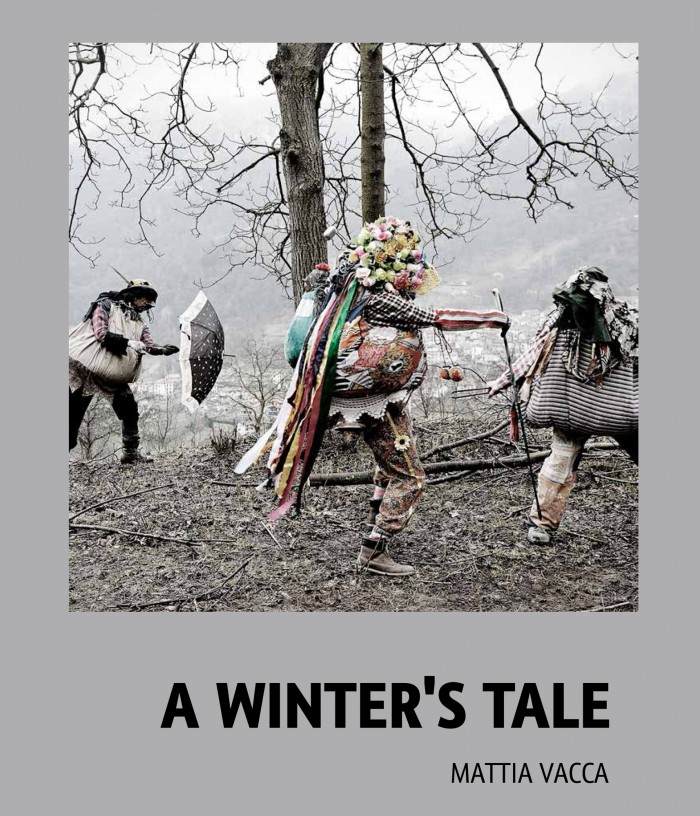
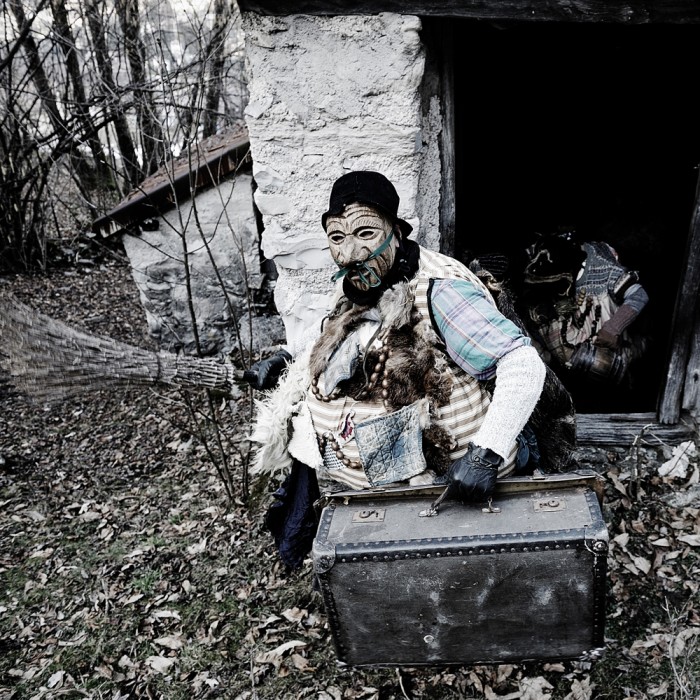
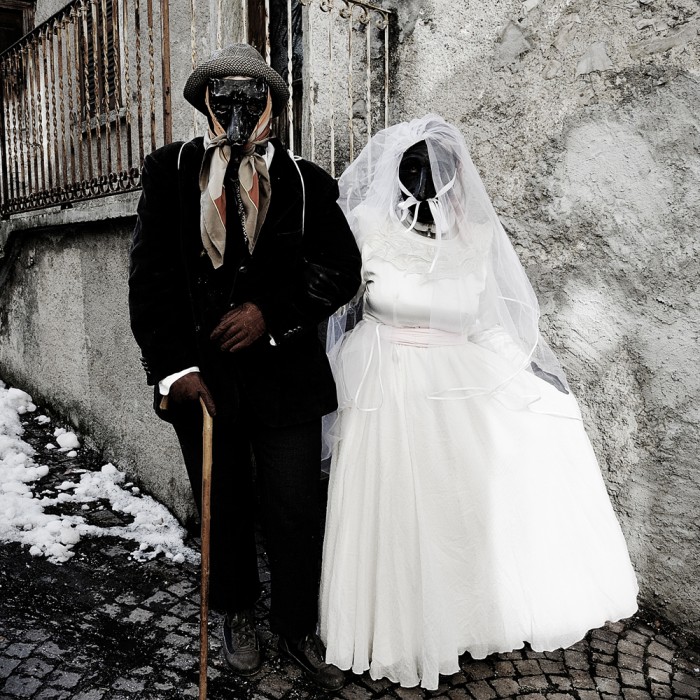
One of the most ancient traditions of Schignano is surely the Carnival, which is celebrated every year in a very peculiar, nay, unique way. The
parade, full of allegories and symbols, depicts the farewell of the men, who have to leave village one again towards their migrant destiny.
The Carnival sinks its roots in the past, common to many villages of the region, when the men used to leave their homes and families for
nine months a year. The end of the Carnival thus enacts the departure of the men and the solitude of the women. A spontaneous festival,
anarchical, with no rules nor written laws, that continues to live only thanks to the people’s
spirit and to the artisans who cave the characteristic wooden masks.
"A winter' s tale" is my first long term project , it took me more than three years. I just printed the book with a successful crowdfunding
campaign. I was granted exceptional access to the heart of a community which is notoriously closed. My work reflect this uncanny reality
without questioning it, without explaining it or putting it into context. The frame is never wide enough to break the illusion, to unveil the trick.
the alternative dimension of the Carnival becomes legitimate. You just need to leave your rational part behind. Let the pictures drag you into
the story and lead your way. You have to take a leap of faith and plunge into the hallucinated world of the Carnival.
-
BiographyMattia Vacca is a freelance photojournalist and a documentary photographer. For ten years, he was a daily contributor for Corriere della Sera covering breaking news stories in Northern Italy. He is currently working on various personal projects focused on social issues and the consequences of armed conflicts around the world. He is the founder of the independent publishing house Delicious Editions. In 2018 he joins Prospekt Agency. His work has been featured on New Republic, Wired, The Guardian, Die Zeit, BBC, Vice, among the others. He received numerous awards including Sony WPO.
-
Awards2018 Lugano PhotoDays First prize / Switzerland 2018 Photovisa Photojournalism Awards, Finalist / Russia 2018 Il Reportage Photojournalism Awards, Finalist / Italy 2018 Royal Photographic Society Awards, Finalist / United Kingdom 2018 Istanbul Photobook Festival, Two Books selected for the PhotoBook Show / Turkey 2018 Scan Tarragona Photo Festival, selected for the PhotoBook Show / Pourtugal 2018 Athens Photo Festival, selected for the PhotoBook Show / Greece 2018 Athens Photo Festival, Finalist / Greece 2018 Kolga Tbilisi Photo Awards, Finalist category Reportage / Georgia 2018 Kolga Tbilisi Photo Awards, Finalist category Mobile PhotoStory / Georgia 2018 Kolga Tbilisi Photo Awards, Finalist category Mobile OneShot / Georgia 2018 Balkan Photo Awards, First prize category Nature and environment / Bosnia 2018 Balkan Photo Awards, Shortlisted category Cultural Heritage / Bosnia 2018 Odesa/Batumi PhotoFestival two works selected for the night screenings / Georgia 2018 Indian PhotoFestival selected for exhibition / India 2018 Reclaim Photography Festival, Selected / United Kingdom 2018 J Photobooks Show, Cork Photo Festival, Two Books selected / Ireland 2017 Photogrvphy Grant, Nominee category Photojournalism / USA 2017 Felix Schoeller Photo Awards, Finalist category Portraits / Germany 2017 Balkan Photo Awards, First prize category Cultural Heritage / Bosnia 2017 Premio Vergani, First prize category Web Doc / Italy 2017 Phodar Biennial, Finalist / Bulgaria 2017 IPOTY - International Photographer of the Year Awards, Honorable Mention category Documentary / USA 2017 IPOTY - International Photographer of the Year Awards, Honorable Mention category Photo Essay / USA 2017 Kolga Tbilisi Photo Awards, Finalist category OneShot / Georgia 2017 Kolga Tbilisi Photo Awards, Finalist category Mobile OneShot / Georgia 2017 Kolga Tbilisi Photo Awards, Finalist category OneShot / Georgia