Aurelie Beeston

PX3 Prix de la Photographie Paris 2025 – Professional
First Place Winner in Architecture – View from
You describe the use of chemicals like rust, makeup, and watercolours to form intricate crystal-scapes. Could you walk us through your creative process in setting up and capturing these images?
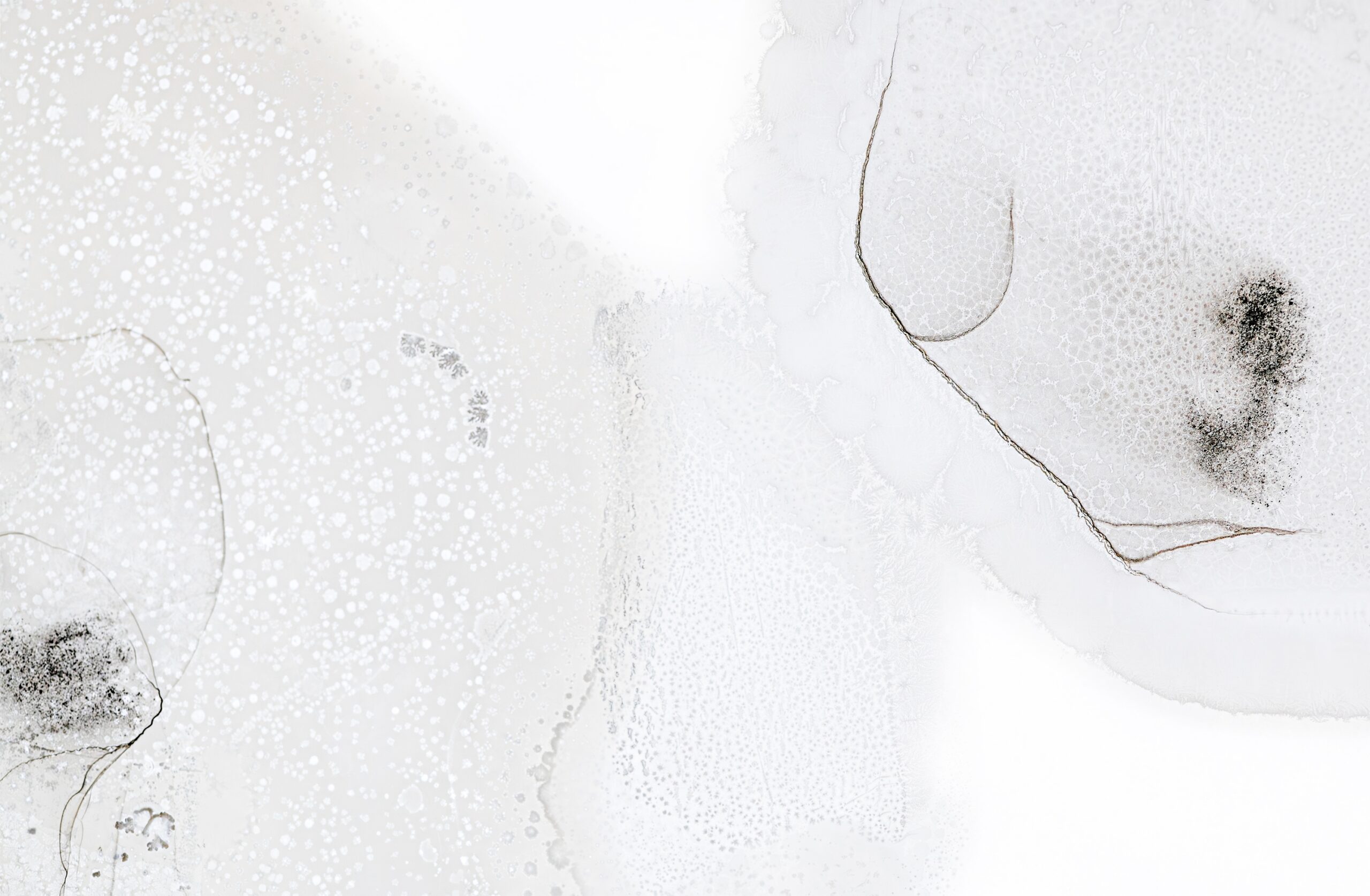
I start by choosing simple household chemicals to form a crystalline base. In this series, each one is linked to a room of the home. For example, I use washing soda for works connected to the bathroom, or baking soda for pieces tied to the kitchen. To bring depth and colour, I layer in materials such as makeup, rust, or watercolours that match the feel of each domestic space. Each chemical behaves differently, creating distinct shapes that help echo the landscape I want to evoke. In an image inspired by the garden for instance, the crystals formed tree-like structures, and I added colours that suggested a peaceful outdoor space.
Each of these crystalline worlds is only about 20 × 15 cm. They don’t look like much at first glance! It’s only through my macro lens that the hidden landscapes reveal themselves. I look for different compositions within an area just a couple of centimetres across, where the crystals really come into focus. What I love is that people often think that these are landscapes taken from a drone! Nature follows the same rules, on a macro or a large scale.
Different light setups completely transform how each landscape appears: backlighting with the sun, side-lighting with my phone or a small video light, and even using my computer screen as a backlight. I block light with bits of black cardboard (like a mini gobo). It’s a very low-fi setup and fits into my small workspace.
How do the fragile and shifting forms in your images mirror the resilience of women redefining their roles?
For so long, women’s lives have been shaped and limited by domestic and societal expectations. The kitchen (and the home more broadly) has been a site of unseen, yet essential labour. By using the very chemicals tied to daily household tasks, View from reframes these materials, transforming them from tools of maintenance into catalysts for new worlds.
Like women, the crystals shift, adapt, and evolve, reshaping their boundaries as they form. Their transformation mirrors the way women continue to redefine their roles with creativity and determination, pushing against rigid expectations to create something entirely new.
The crystal growth is very fragile and reflects how political progress for women can easily be destroyed.
With these imagined landscapes, the home is not just a site of labour but of possibility and creativity. Materials associated with chores are reimagined as agents of beauty and change. Some images deal more with the inner world, such as “View From my Nightmares, C5H8NO4Na”.
We have heard “women belong in the kitchen” way too much. Women are resilient and always reclaiming and redefining the spaces and roles assigned to them.
How do you approach composition in macro photography, especially when working with materials that change over time?
You have to be quite patient with these landscapes! They can take a long time to form and dry, especially in Queensland’s humidity. Some take weeks. I try to guide where certain patterns and colours form and mix, but there’s always an element of chance. The final result depends on the chemical concentration, how the pigments move across the surface, and the weather. Some add-ons behave better than others: liquid makeup can clump in unappealing ways, while powders create a lovely shimmering effect.
The substrate I use the most is thin and quite flimsy, which adds another challenge. I prefer to photograph the piece front-on so I can direct light from different angles. But the surface curls or sometimes collapses, and crystal formations can break with the lightest touch. They’re extremely fragile and difficult to store, so in many ways they’re fugitive artworks. I have to photograph them well the very first time because they may not survive long enough to be re-photographed. Some of them continue to change over time.
Winning the Special Photographer of the Year title at PX3 is a major honour. What does this recognition mean to you?
When I read the news, I cried! It felt incredible to have this work resonate with the judges. The recognition has given me such a boost. It’s a great encouragement to keep experimenting and putting my work out into the world.
Do you plan to expand this project further, perhaps exploring other aspects of domestic life or other materials?
Absolutely. I’ve begun growing crystals on negatives, leaves, and printed photographs. My next direction is to incorporate crystal formations into portraits and landscapes and let the growth become part of the story. I’ve tested the process on cyanotypes, but watercolour paper isn’t the best medium for growth, so I’ll keep pushing and discovering new techniques. There’s so much more to explore!